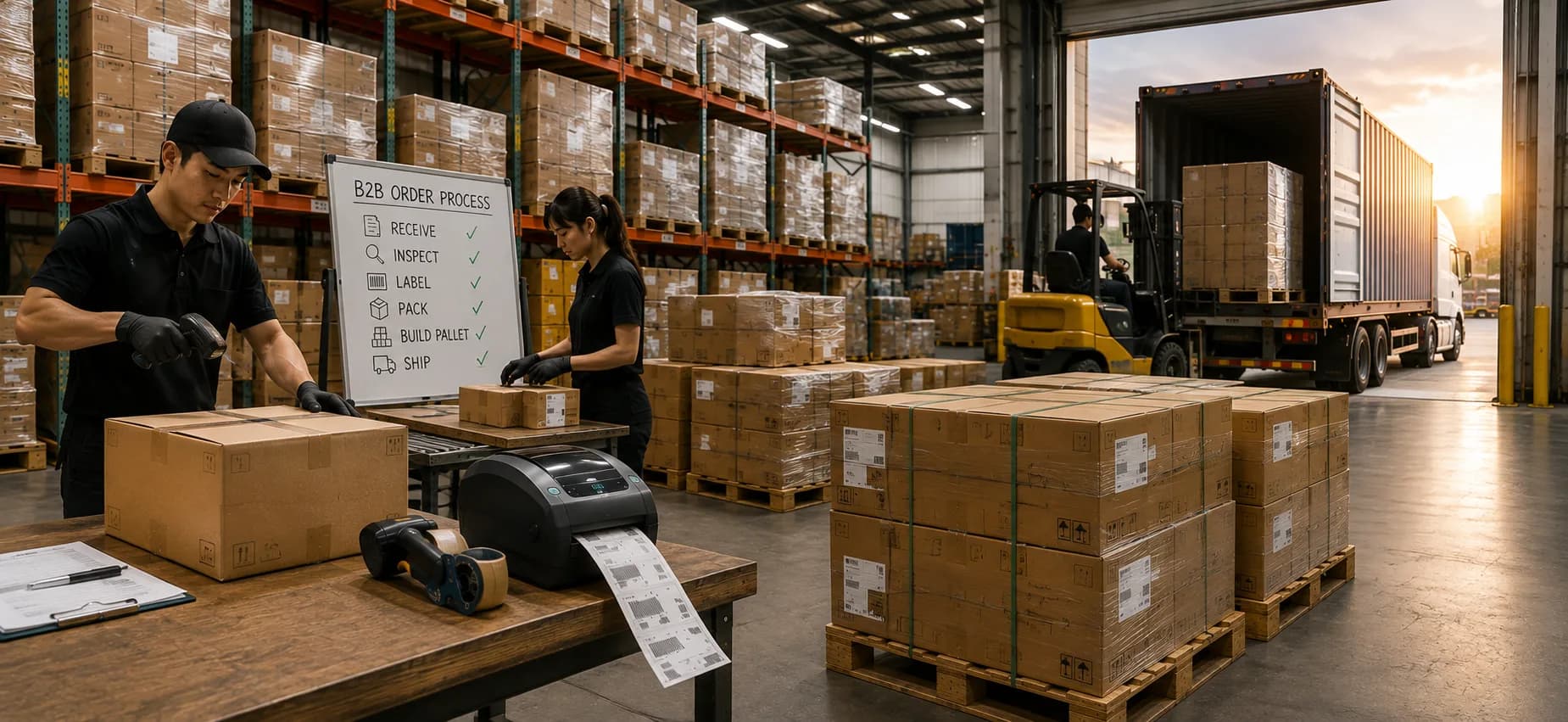
B2B Fulfillment Services
Wholesale order fulfillment for purchase orders, case and pallet shipments, and the routing requirements your retail buyers hold you to — run from Southern California.
- Purchase orders, cases & pallets
- Routing guides set up per account
- LTL & FTL booked to the guide
- LA · Ontario · Riverside
- Case picks
- Mixed pallets
- LTL
- FTL
Carrier, labels and delivery appointment follow each buyer's routing guide.
Purchase orders, cases and pallets — handled to the buyer's rules
B2B orders don't behave like parcels. They arrive as purchase orders, ship by the case or the pallet, and carry a routing guide that tells you exactly how the buyer wants cartons marked, pallets built, shipments announced and trucks scheduled. Miss one of those and the load can be refused at the dock or come back as a deduction — which is why wholesale fulfillment is a different operation from picking singles into poly mailers.
IDCEA runs B2B fulfillment services as their own discipline: purchase-order intake by EDI or portal, case and pallet picking, buyer-specific carton labels, compliant palletizing, ASN transmission, delivery appointments and LTL or FTL booking. It runs through partner warehouses in Southern California, close to the Los Angeles / Long Beach ports for imported inventory and to the Inland Empire freight corridors for outbound.
B2B & Wholesale Fulfillment Services
Case & Pallet Fulfillment
Case pick fulfillment for mixed wholesale orders and full-pallet picking for bulk order fulfillment, with counts checked twice before a pallet is closed.
Purchase Order Fulfillment
Purchase order fulfillment from intake to confirmation: POs arrive by EDI or portal, we validate quantities and ship-window against the order, and flag anything that will not ship complete before it becomes a short.
Retailer Compliance
Retail routing guide compliance per account — carton marks, buyer-specific labels, pallet height and pattern rules, and packing-slip placement, set up once per retailer and then applied on every order.
EDI & ASN Support
EDI fulfillment services covering the documents wholesale orders actually run on — 850 in, 856 ASN out, 810 where your buyer requires it — so the receiving dock sees the shipment before the truck arrives.
Palletizing & Freight Coordination
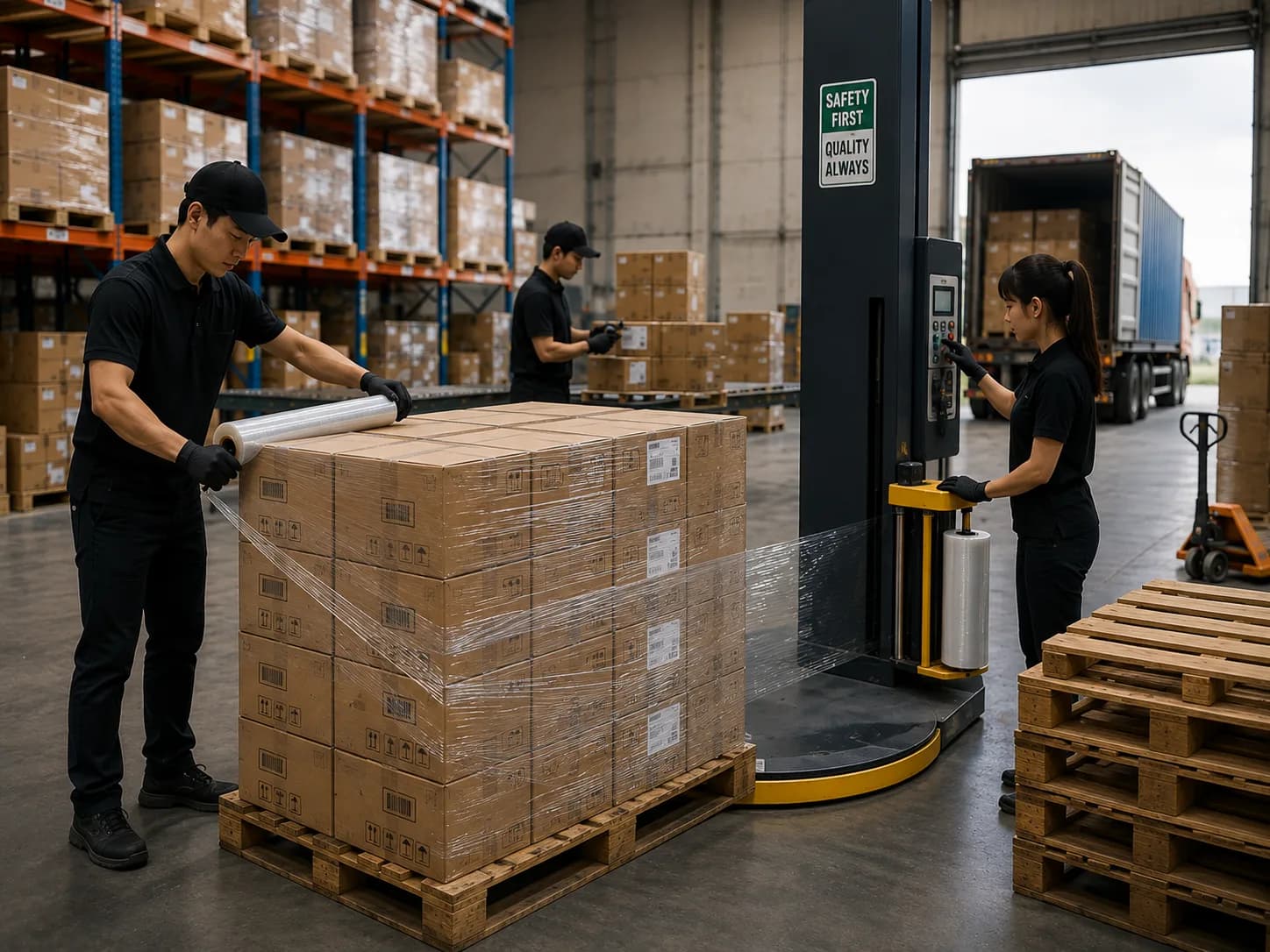
Palletizing services, shrink-wrap and pallet labeling, then LTL fulfillment or FTL booking with the carrier and delivery appointment your buyer's routing guide specifies.
Inventory & Lot Tracking
B2B inventory management with real-time counts by SKU and account, plus lot, batch and expiration tracking where your products or your buyers require it.
How Our B2B Fulfillment Process Works
Receive & store
Inbound freight is docked, counted against the ASN or packing list and stored by SKU with lot control where it applies.
Order in
Purchase orders arrive by EDI 850 or portal; we check the routing guide for that retailer before anything is picked.
Pick & palletize
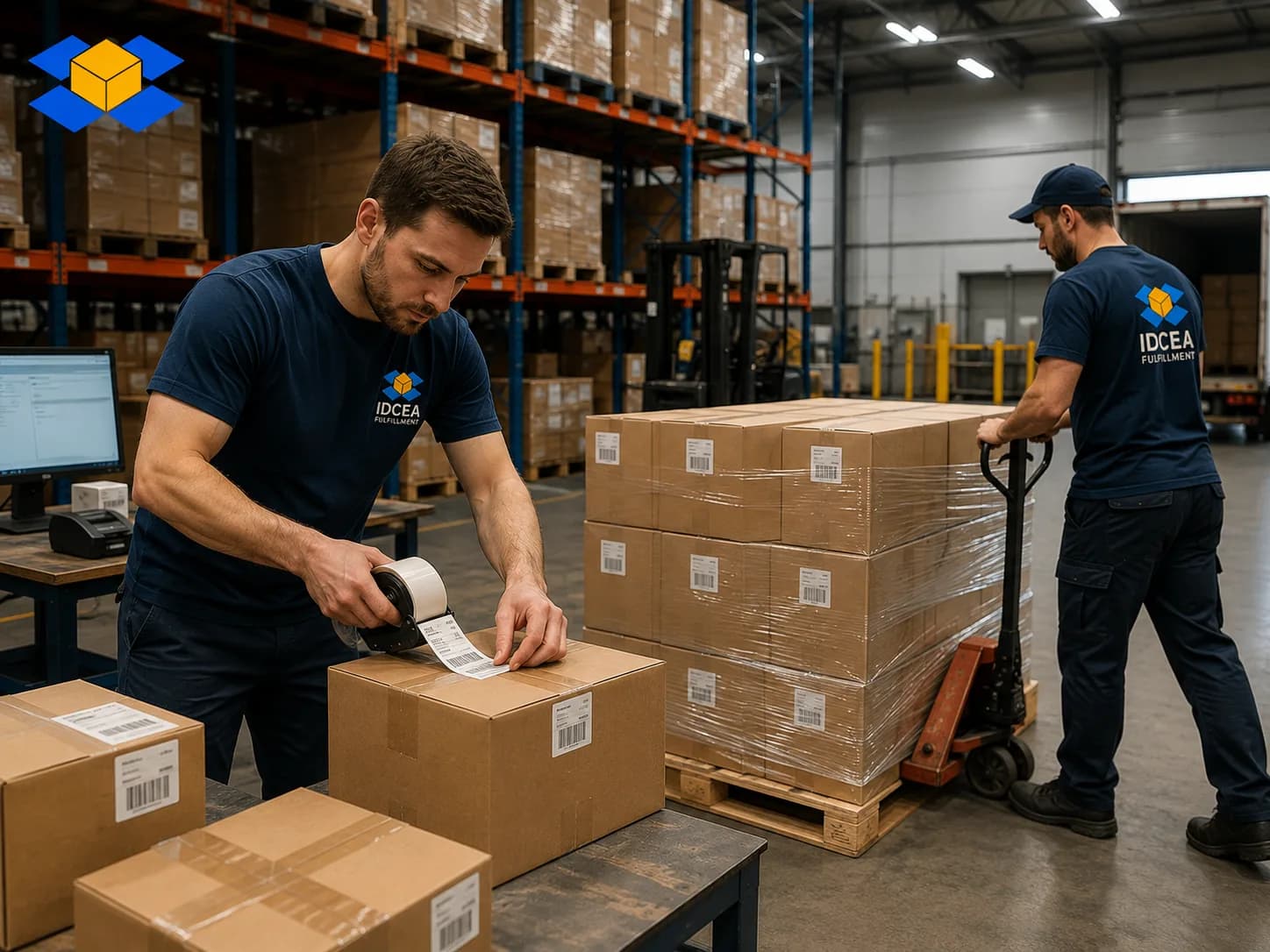
Case- and pallet-level picking, buyer-specific carton labels, then pallets built and wrapped to the account's pattern and height rules.
Ship & confirm
LTL or FTL booked to the routing guide, delivery appointment made, ASN sent, and tracking returned to you and the buyer.
B2B Fulfillment vs. DTC Fulfillment
The two share a building and almost nothing else. DTC fulfillment picks eaches into parcels for consumers: one item, one box, one residential address, and the only rule that matters is the carrier's. B2B order fulfillment picks cases and pallets against a purchase order for a retailer or distributor, and the rules come from the buyer.
That difference shows up everywhere downstream — in how stock is stored, how orders are picked, what goes on the outside of a carton, whether a shipment has to be announced electronically before it moves, and whether a truck can simply arrive or needs a booked appointment. A parcel operation that takes wholesale orders on the side tends to discover these one deduction at a time.
Same building, different rules
- DTC
- Eaches into parcels for consumers — the carrier's rules.
- B2B
- Cases and pallets against a purchase order — the buyer's rules.
Retailer Compliance Support
Every retail buyer publishes a routing guide, and no two are alike: carton mark placement, label formats, pallet height and overhang limits, tie-and-high patterns, packing-slip position, which carrier to use in which lane, how far ahead an ASN has to land, and how delivery appointments get booked.
We set those requirements up per account and apply them on the pick line rather than checking them at the end. That reduces the errors that cause rejections and deductions — but we do not control the receiving dock, and no 3PL can promise a buyer will accept every load, so we do not make that promise.
What a routing guide specifies
- Cartons
- Mark placement, label formats, dimensions and weight limits.
- Pallets
- Height and overhang limits, tie-and-high patterns, wrap.
- Paperwork
- Packing-slip position and how far ahead the ASN has to land.
- Delivery
- Which carrier in which lane, and how appointments are booked.
Pallet, LTL & FTL Fulfillment
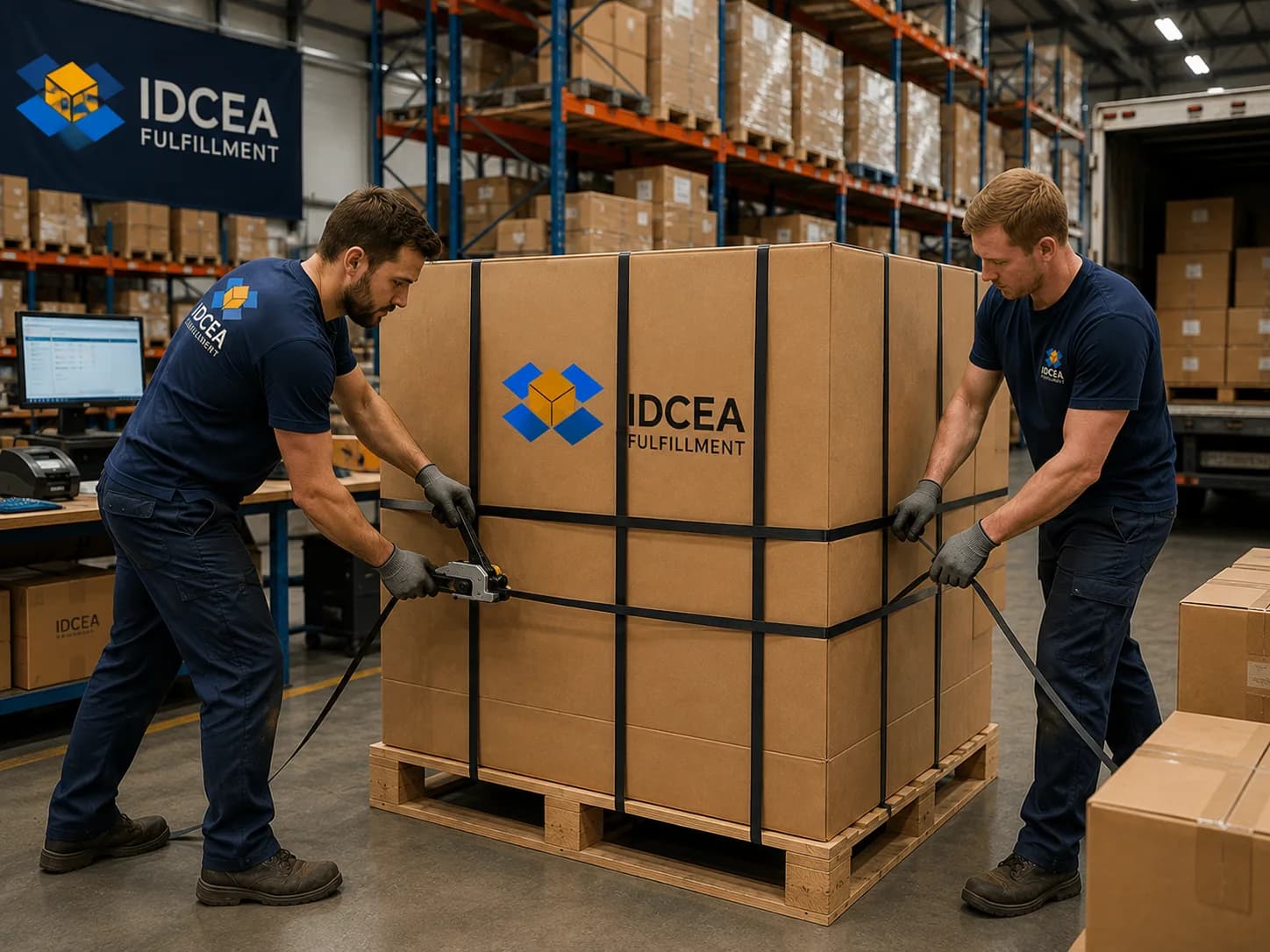
Wholesale orders leave as freight, not parcels. Cases are picked, built into pallets to the buyer's pattern, wrapped and labeled, then tendered as LTL for a few pallets or FTL when the order fills a trailer.
We book to whatever the routing guide specifies — the buyer's routing carrier where they have one, or our own tendering where they leave it to the shipper — schedule the delivery appointment, and return the BOL, PRO and tracking so you and your buyer can both follow it in.
- STEP 1Cases picked
- STEP 2Pallet built to pattern
- STEP 3Wrapped & labeled
- STEP 4Tendered LTL / FTL
- STEP 5Appointment booked
- STEP 6BOL, PRO & tracking returned
B2B Fulfillment for Brands, Wholesalers & Distributors
Wholesale is usually a brand's second fulfillment model, bolted onto an operation built for parcels. That is the point where a B2B 3PL earns its keep:
B2B Fulfillment in Southern California
The work runs through partner warehouses in the Los Angeles, Ontario and Riverside corridor. IDCEA staffs and coordinates the operation; we do not own the buildings, and we would rather say so than imply facilities we do not operate.
For importers that position matters twice: containers clear the Los Angeles and Long Beach ports and go straight into wholesale distribution without a cross-country leg first, and the Inland Empire sits on the I-10 and I-15 corridors, so outbound LTL and FTL reach carriers and retail DCs on regular schedules.
The corridor
- Los Angeles
- Closest to the LA / Long Beach port complex.
- Ontario
- Inland Empire, on the I-10 and I-15 freight corridors.
- Riverside
- Inland Empire, for space and outbound lanes.
Why brands run wholesale through IDCEA
Built to reduce compliance errors
Routing-guide rules sit in the pick line per account, instead of being caught after a load is rejected.Positioned for Southern California distribution
Partner warehouses in the LA / Ontario / Riverside corridor — near the ports for inbound, on the freight corridors for outbound.Scales with POs
Capacity for seasonal surges and growing account volume.What you pay for — and what you don't
Billed per activity
- Pick & pack — first item per order, plus each additional item
- Storage — from day 8, by cubic metre and inventory age
- Receiving — per carton or per container
- Returns — per package received, inspection per unit
- Packaging materials — billed on the materials used
- Carrier postage — at the applicable carrier rate
Not billed
- Setup fee
- Monthly minimum
- Basic WMS / OMS access
- Storage for the first 7 days
Three steps to get started
Check the starting rates
See what pick and pack starts at and what drives the rest of the invoice, so you know what to send us.View 3PL pricing →Request a quote
Tell us your SKUs, channels and any special handling, and we'll confirm how the work runs and what it costs for your account.Request a quote →Send your inventory
Ship your first inbound to the Southern California partner warehouse we assign; it's received and counted against your paperwork before any work starts.Common questions
Fulfilling orders placed by another business — a retailer, distributor or wholesaler — rather than a consumer. Orders arrive as purchase orders, ship by the case or pallet, and have to follow the buyer's routing guide for labeling, palletizing, shipment notification and delivery scheduling.
It runs the wholesale side of your operation: receiving and storing bulk inventory, taking POs by EDI or portal, picking cases and pallets, applying buyer-specific labels, building compliant pallets, sending ASNs, booking LTL or FTL freight and making delivery appointments.
DTC picks single items into parcels for consumers. B2B picks cases and pallets against purchase orders for businesses, under rules the buyer sets — carton marks, pallet patterns, ASN timing, routed carriers and booked appointments. Different picking, different packing, different paperwork.
Yes. Wholesale and retail purchase orders are a core part of what we run, alongside ecommerce and marketplace fulfillment for the same brands.
Yes — case pick fulfillment for mixed orders and full-pallet picking for bulk. Pallets are built, wrapped and labeled to the account's requirements.
Yes. We take purchase orders by EDI 850 and send 856 ASNs, plus 810 invoicing where a buyer requires it. Where a retailer uses a portal instead, we work from the portal.
Yes. We set each account's routing guide up once — carton marks, label formats, pallet rules, carrier routing and appointment procedure — and apply it on every order for that buyer.
Yes: palletizing to the buyer's tie-and-high pattern and height limits, shrink-wrap, pallet labels and pallet-level counts.
Yes. We tender LTL for partial loads and FTL when an order fills a trailer, using the buyer's routing carrier where one is specified, and book the delivery appointment.
Yes. Most B2B inventory arrives straight from a manufacturer, importer or freight forwarder; we dock it, count it against the paperwork and put it away.
Yes, where your products or your buyers require it — including FIFO or FEFO release for dated goods.
In Southern California, through partner warehouses in the Los Angeles, Ontario and Riverside corridor — near the ports for imported inventory and on the Inland Empire freight corridors for outbound.
It depends on order profile — cases per order, pallets per shipment, storage and freight lanes. Our 3PL pricing page explains how the charges are built up, and the cost calculator gives an estimate from your own volumes.
Start a quote
Tell us roughly how much you ship and we'll quote b2b fulfillment on the published rates — the same ones on the pricing page.
Picking a range just pre-fills the form — you can change it there, and the published rates are the same whichever range you fall in.
Where to go next
3PL fulfillment services
The parent service: storage, pick and pack, multi-channel orders and returns.
3PL pricing
How receiving, storage, pick-pack and freight charges are built up.
Retail fulfillment
Ticketing, labeling and routing for big-box and boutique retail accounts.
Amazon FBA prep
FNSKU labeling, poly bagging and carton forwarding for the FBA side of your business.
Warehouse storage services
Hold bulk inventory between production runs and wholesale ship windows.