
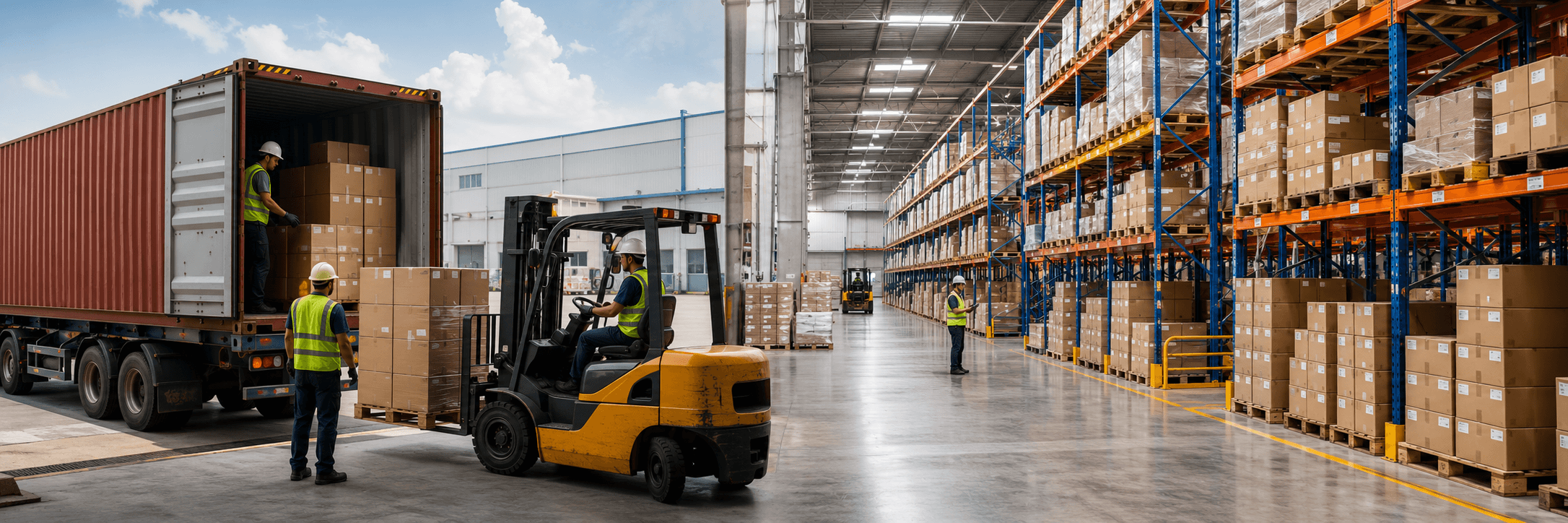
Warehousing for Consumer Goods & Ecommerce Brands
Receiving, pallet and SKU storage, inventory management and outbound operations — through partner warehouses in the Los Angeles, Ontario and Riverside corridor.Request a Warehousing QuoteCommercial & Ecommerce Warehousing Services
Consumer goods warehousing, Los Angeles to Riverside — partner sites through Ontario, and business inventory storage rather than consumer self-storage. Receiving, pallet and SKU storage, accurate counts and outbound release, for the goods your operation runs on.
Warehousing services solve a specific problem: you have inventory, and the place it currently sits is the wrong place. A container has landed early, a seasonal buy has outgrown the backroom, or you are holding stock in the U.S. to reach American customers without shipping each order from overseas. Warehouse storage services take that inventory in, put it somewhere with an address, keep the count honest and hand it back when you ask.
IDCEA runs warehousing and distribution through partner warehouses in the Los Angeles, Ontario and Riverside corridor, for ecommerce brands, importers, manufacturers, distributors, retail suppliers and international sellers holding inventory stateside. We staff and coordinate the operation; we do not own the buildings, and we would rather say so than imply facilities we do not operate.
Warehousing & Inventory Storage Services We Provide
Inventory Receiving
Warehouse receiving services from the dock in: we book the delivery, unload the container, pallets or cartons, count them against your packing list or ASN, and report shortages and damage before the goods disappear into the racking.
Pallet Storage
Pallet storage in rack positions, or floor-stacked where the packaging takes the weight. Billed on the positions actually occupied — you are not paying for a fixed block of space you have not filled yet.
SKU & Carton Storage
Not everything arrives on a pallet. Loose cartons and small-SKU inventory can be shelved and stored by SKU instead, or palletized on arrival if that is cheaper for the volume you hold.
Short-Term & Overflow Storage
Seasonal buys, a container that landed early, or stock that has outgrown your own space. Short-term and overflow storage is quoted the same way as long-term — on the space and the time — with terms set per account rather than sold as a fixed package.
Inventory Management & Visibility
Stock is recorded by SKU and location, with on-hand and available counts visible to you, so a pallet has an address rather than being somewhere in the building. Receipts, putaway, releases and adjustments are recorded as they happen.
Outbound Warehouse Operations
Release on your instruction: pallets or cartons retrieved, staged, checked against the release, and loaded to the carrier or truck you nominate — whether that is an LTL pickup, a full trailer or a transfer into fulfillment.
Storage, Inventory Control & Outbound Operations Built on Experience
Holding inventory close to your customers shortens the domestic leg and takes the pressure off your own space. We receive it, store it under an accurate count, and release it when you need it — as pallets, as cartons, or into fulfillment.
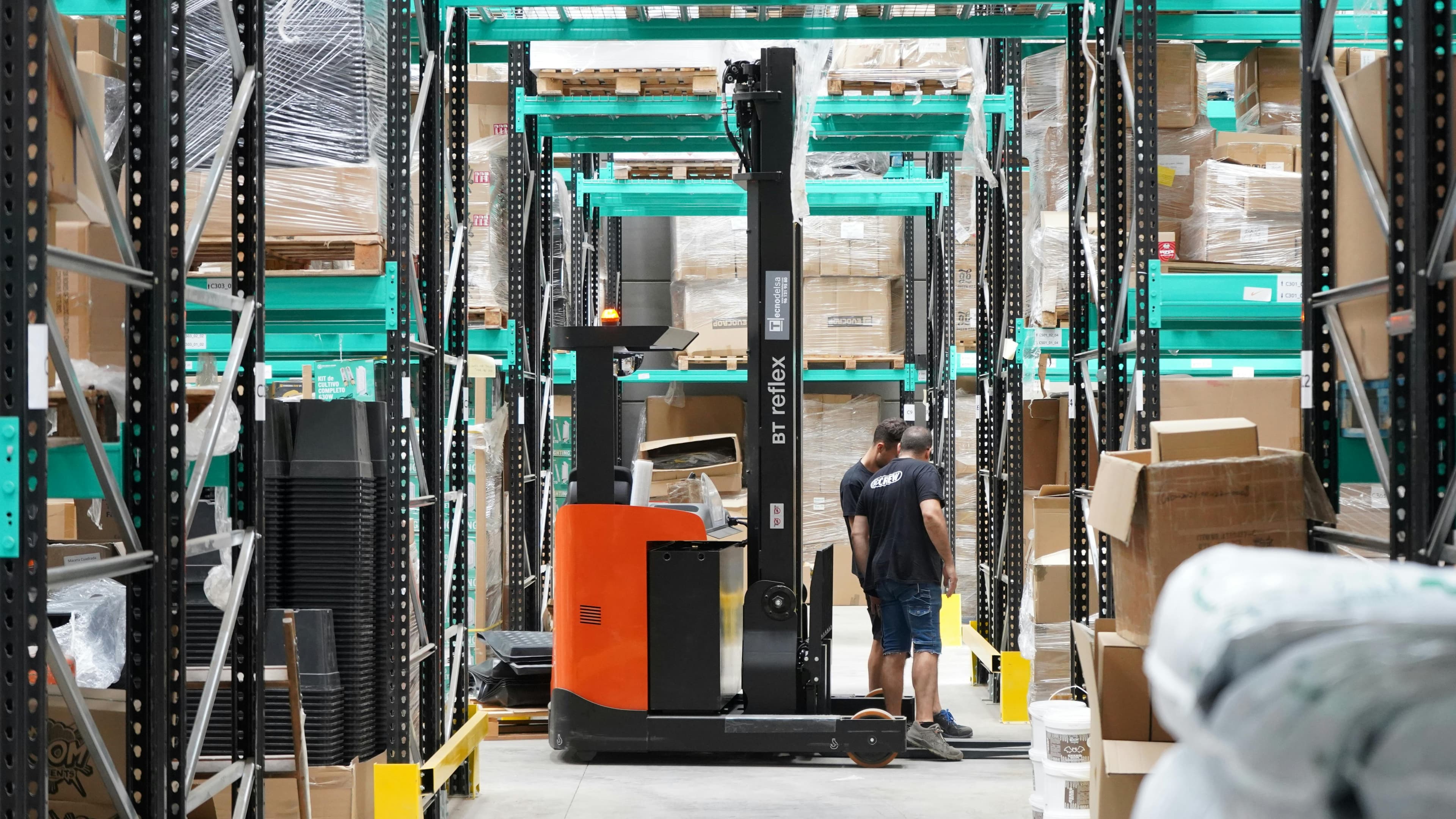
Warehousing vs. Fulfillment: What's the Difference?
We get asked for warehousing, for fulfillment, and for fulfillment warehousing — Los Angeles, Ontario and Riverside brands often mean different things by each. They happen in the same building and are often sold as one thing, but they are different services with different cost drivers. You can take either on its own.
Warehousing
Charged on space and time.
Fulfillment
Charged on orders and units.
Plenty of accounts only ever use the storage side, and ship out by the pallet. Others store bulk with us and have the same stock picked and packed as customer orders — see 3PL fulfillment services for that half. Because both run on one inventory record, moving from one to the other does not mean shipping the goods anywhere.
Warehousing & Distribution Services
What actually happens to your inventory between the inbound appointment and the outbound truck.
Inbound
Container, LTL or parcel inbound is booked to a dock slot against your ASN or packing list.
Receive
Unloaded and counted in; shortages, overages and damage are recorded against the paperwork, not discovered later.
Putaway
Goods go to a specific rack, floor or shelf location, and that location is written to the inventory record.
Store & manage
Stock sits under an accurate count, with cycle counts and adjustments recorded as they happen.
Release & stage
On your instruction the pallets or cartons are retrieved, checked against the release and staged at the dock.
Outbound
Loaded to the carrier or truck you nominate — or transferred into pick-face if the same stock is being fulfilled as orders.
Warehouse Storage for Ecommerce Inventory
Ecommerce inventory has two states, and they cost different amounts to hold. Bulk stock — the container that just landed, the seasonal buy, the reorder that arrived before the last one sold through — belongs in bulk storage, priced on pallet positions. Pick-face stock, the few weeks of cover you are actively shipping from, belongs in fulfillment space.
Holding both with the same provider means replenishing pick-face is an internal move rather than a shipment. If you want the orders picked and shipped as well as stored, that is ecommerce fulfillment — and prep for Amazon inbound is covered by Amazon FBA prep services.
U.S. Warehouse Storage for Importers & International Sellers
For a seller based outside the United States, international ecommerce fulfillment, Los Angeles included, starts with holding stock stateside — what is often called an overseas warehouse. It changes the economics of every order. Instead of each sale shipping internationally, inventory moves once as a container and then goes out as a domestic delivery: shorter transit, lower per-order cost, and returns that come back to a U.S. address.
The path is manufacturer or supplier → port of entry → Southern California warehouse → storage → release or fulfillment. We pick that up at the warehouse door: the container is booked into a dock slot, counted in and put away.
What we do not do is customs brokerage or international freight forwarding. Clearance and the ocean leg stay with your broker and forwarder; we coordinate the delivery appointment with them and take it from there.
Warehousing Services in Riverside & Southern California
The storage capacity we work with sits in the Los Angeles, Ontario and Riverside corridor, and our office is in Riverside. That places the inventory on the Inland Empire side of the region: inbound from the Los Angeles and Long Beach ports arrives without a cross-country leg, and outbound reaches the I-10 and I-15 lanes that serve California and the western states.
One distinction worth being explicit about: these are partner warehouses that IDCEA staffs and coordinates, not buildings IDCEA owns, and naming a service area is not the same as claiming a facility in every city in it. If a specific location matters for your inbound or your outbound lanes, ask and we will tell you what is actually available.
Expert Team & Advanced Facilities
Our strength lies in skilled professionals and proven systems working together across the Los Angeles, Ontario and Riverside corridor.
Our Expert Team
Our Advanced Facilities
Warehousing Services: Common Questions
What businesses ask before moving inventory into a third-party warehouse.
Warehousing is the storage half of logistics: receiving your inbound freight, counting it in, putting it away in a known location, keeping the inventory record accurate while it sits, and releasing it again when you need it out. It stops at the warehouse door — picking and packing individual customer orders is fulfillment, which is a separate service.
Inbound receiving and count verification, putaway to pallet or shelf locations, the storage itself charged on the space occupied, inventory records by SKU and location, and outbound release — retrieval, staging and loading onto the truck or carrier you nominate.
Yes. Palletized goods are stored in rack positions or floor-stacked where the packaging allows it, and billed on the positions occupied. Loose cartons and non-palletized inventory can be received and shelved instead, or palletized on arrival if you'd rather store it that way.
Yes. Most inbound arrives straight from a manufacturer, importer or freight forwarder rather than from you. Send us the packing list or ASN ahead of the delivery and we'll book the dock, count it in against the paperwork and report shortages or damage.
Short-term, seasonal and overflow storage are quoted the same way as long-term: on the space occupied and how long it's held. Any minimum term or minimum space is set per account, so tell us the volume and the dates and we'll quote against them rather than against a standard package.
Yes — bulk stock, seasonal buys and container arrivals can sit in storage and then be moved into pick-face when you need it fulfilled. Storage and fulfillment run out of the same buildings, so inventory doesn't have to be shipped anywhere to switch from one to the other.
Yes, and you can take either on its own. Some accounts only store inventory with us and ship it out by the pallet; others store bulk and have us pick and pack their ecommerce orders from it. Both run on the same inventory record.
Warehousing is about inventory: receive, put away, store, count, release. Fulfillment is about orders: pick the items a customer bought, pack them, buy a label, ship the parcel and handle the return. Warehousing charges follow space and time; fulfillment charges follow orders and units.
Yes. Holding stock in a U.S. warehouse — what overseas sellers often call an overseas warehouse — means domestic delivery to your U.S. customers instead of shipping each order from abroad. We receive the container, store the goods and release or fulfill them from Southern California.
No. We receive goods once they have cleared and arrived at the warehouse. Customs brokerage and international freight are handled by your broker or forwarder, and we'll coordinate the delivery appointment with them.
Stock is recorded by SKU and location, with on-hand and available counts visible to you, so a pallet has an address rather than being somewhere in the building. Movements are recorded as they happen — receipts, putaway, releases and adjustments.
Through partner warehouses in the Los Angeles, Ontario and Riverside corridor in Southern California. IDCEA staffs and coordinates the operation; we do not own the buildings, and we'd rather say so than imply facilities we don't operate.
Yes — the Riverside and Ontario side of the Inland Empire is where most of the storage capacity we work with sits, which is also where the I-10 and I-15 outbound lanes run. Our office address is in Riverside.
Send the volume — pallets or cubic feet, whether it's palletized, roughly how long you need to hold it, and what inbound looks like. Storage-only enquiries are quoted from those numbers. The 3PL cost calculator is built around monthly order volume, so it fits better once fulfillment is part of the picture.
Where to go next
3PL fulfillment services
When stored inventory needs picking, packing and shipping as customer orders.
Ecommerce fulfillment
Storefront and marketplace orders shipped from the same inventory pool.
B2B fulfillment services
Case and pallet orders, retailer routing compliance and LTL/FTL freight.
Amazon FBA prep services
FNSKU labeling, poly bagging and carton forwarding into Amazon's network.
Oversized fulfillment
Bulk storage and freight for large, heavy and bulky SKUs.
3PL pricing
How receiving, storage, pick-pack and shipping charges are built up.