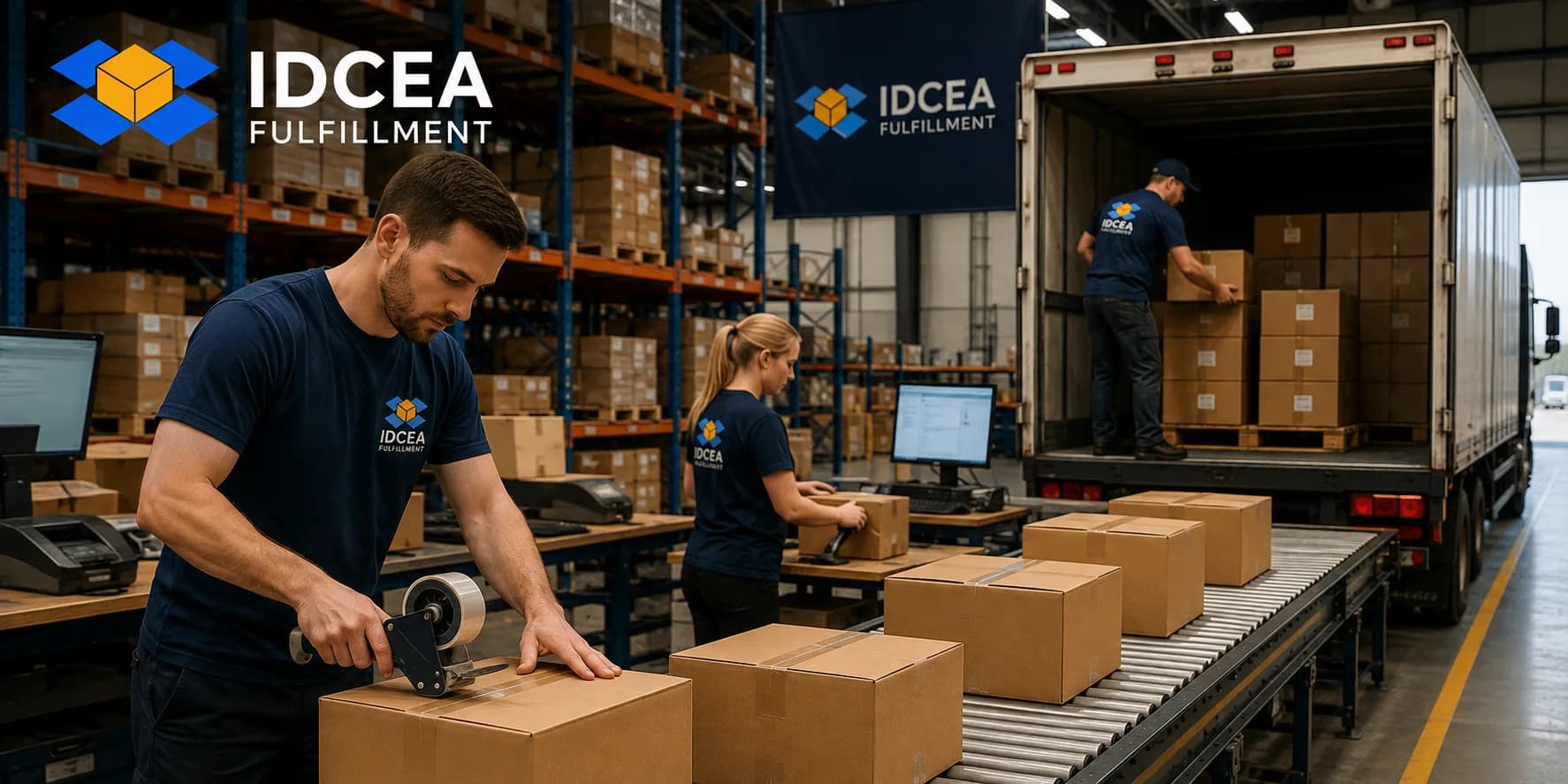
Retail Fulfillment Services
Retail fulfillment services for brands shipping into retail — retailer routing guides, price ticketing, UCC-128 and GS1 carton labeling, EDI/ASN and distribution to DCs or stores.
- Routing-guide compliance
- UCC-128 / GS1 labels & tickets
- EDI / ASN
- DC & direct-to-store orders
- Routing guides
- Price tickets
- UCC-128 labels
- GS1 cartons
- EDI / ASN
- Booked appointments
Prepared the retailer's way, not the parcel way
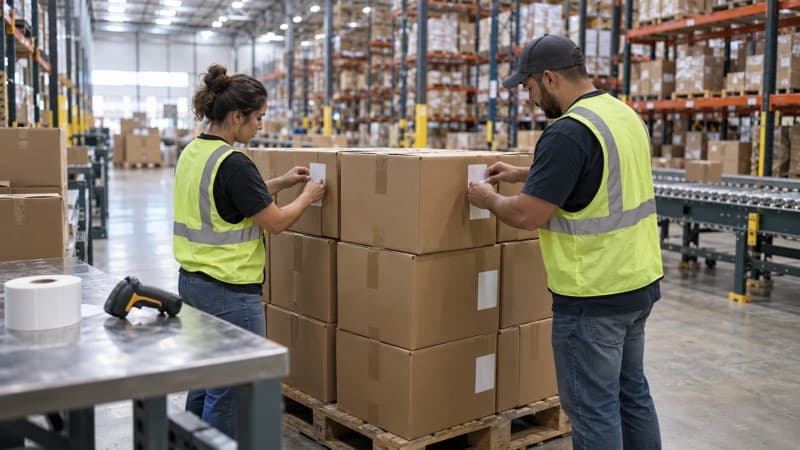
Retail fulfillment services start where parcel fulfillment stops. A retailer doesn't just want the goods; it wants them prepared its way — carton dimensions and labels to its routing guide, price tickets and hangtags placed where its stores expect them, case packs and inner packs to its spec, an ASN in its system before the truck moves, and a booked delivery appointment at the receiving door. Miss one and the load can come back as a deduction or a refusal.
IDCEA runs retail fulfillment as its own preparation workflow: each account's routing guide captured once, then applied on the line — UCC-128 and GS1 carton labeling, retail ticketing, floor-ready and display-ready packing, EDI purchase-order intake and ASN transmission, and retail distribution consolidated to a DC or shipped direct to store. The work runs through partner warehouses in Southern California.
Retail Fulfillment Services We Provide
Retailer Routing Guide Compliance
Retail routing guide compliance set up per account: carton dimensions and marks, label formats and placement, pallet patterns and height limits, routed carrier, ASN timing and appointment procedure. The rules live on the pick line rather than in a checklist someone runs at the end.
Retail Labeling & Ticketing
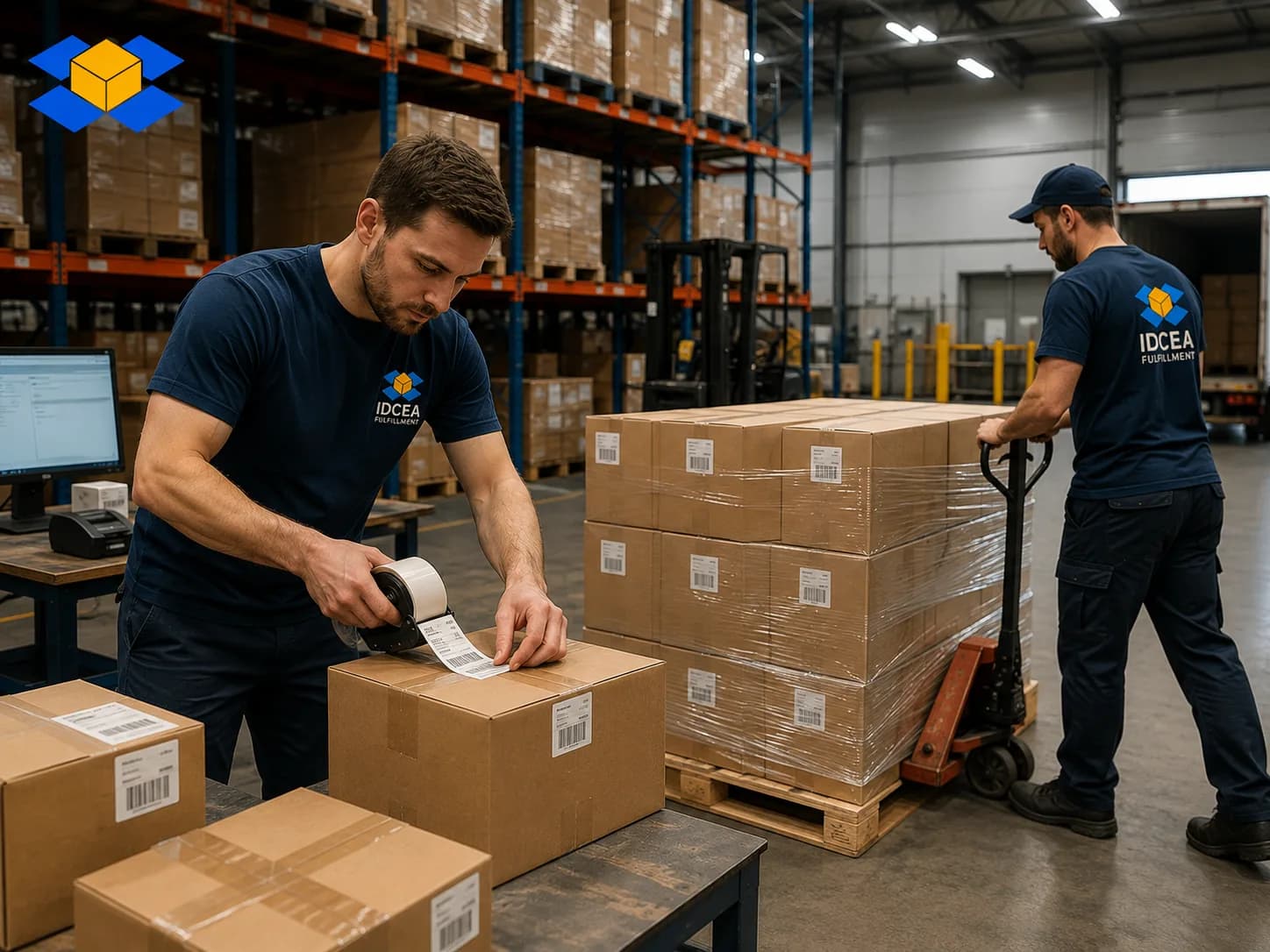
Retail labeling and ticketing services — price tickets, hangtags, retailer-specific SKU and item labels, and size or color stickers — applied in the position and format the buyer's routing guide specifies.
UCC-128 & GS1 Carton Labeling
UCC-128 labeling with SSCC-18 serial numbers and GS1 carton labeling generated per shipment, so the carton label on the box matches the ASN the retailer's system is expecting to scan at the door.
EDI & ASN Support
EDI retail fulfillment covering the documents retail programs run on — 850 purchase orders in, 856 ASN out, 810 where the retailer requires it. Where an account uses a vendor portal instead of EDI, we work from the portal.
Case-Pack & Inner-Pack Preparation
Case packs and inner packs built to each retailer's spec — units per inner, inners per case, mixed or solid packs, and the carton marks that identify them. The same SKU often ships in different pack configurations to different accounts.
Floor-Ready & Display-Ready Packing
Retail-ready packaging that saves work at the store: floor-ready cartons that open into shelf-ready trays, display-ready packs and pre-priced units, prepared where the account's program calls for them.
Retail Distribution
Retail distribution to where the order is going — consolidated shipments into a retailer's distribution center, or direct-to-store fulfillment split by location, palletized and tendered to the carrier the routing guide names.
How Our Retail Fulfillment Process Works
Onboard rules
We capture each retailer's routing guide once — labels, tickets, pack configuration, pallet rules, ASN timing and appointment procedure — and set it up as that account's standard.
Prep to standard
Retail ticketing, UCC-128 and GS1 carton labels, case and inner packs, and floor-ready or display-ready packing configured to the account's spec.
Schedule
The 856 ASN is transmitted and the delivery appointment booked with the DC or store before the shipment leaves.
Ship compliant
Consolidated to the distribution center or split direct-to-store, tendered to the routed carrier, with BOL and tracking returned to you.
Retail Fulfillment vs. DTC Fulfillment
Both ship your product, and that is roughly where the similarity ends. DTC fulfillment picks single units into parcels for consumers — one item, one box, one residential address, and the only rules that matter are the carrier's. Retail order fulfillment prepares cases and pallets against a purchase order for a retailer, and almost every rule comes from the buyer.
- Retail: purchase orders, cases and pallets, routing guides, UCC-128 / GS1 labels, ticketing, EDI / ASN, booked appointments, DCs and stores
- DTC: individual consumer orders, each-picking, parcel carriers, residential delivery
- Retail prep is front-loaded — the work happens before the pick, not at the packing bench
- A retail error surfaces as a deduction weeks later; a DTC error surfaces as one refund
Retailer Compliance & Routing Guide Support
Every retail account publishes a routing guide, and no two read alike. One specifies carton dimensions and a maximum weight; another dictates where the UCC-128 label sits on the carton face and where the price ticket goes on the unit; another sets pallet tie-and-high patterns, wrap and overhang limits, how many hours ahead the ASN has to land, which carrier to use in which lane, and how appointments get booked.
We set those requirements up once per account and apply them during picking and packing, which is where compliance errors are actually prevented. What we do not do is promise the outcome: the receiving door is the retailer's, deductions are the retailer's judgment, and no 3PL can guarantee acceptance or zero chargebacks. Anyone promising that is describing something they don't control.
What a routing guide specifies
- Cartons
- Mark placement, label formats, dimensions and weight limits.
- Pallets
- Height and overhang limits, tie-and-high patterns, wrap.
- Paperwork
- Packing-slip position and how far ahead the ASN has to land.
- Delivery
- Which carrier in which lane, and how appointments are booked.
Retail Labeling, Ticketing & Carton Preparation
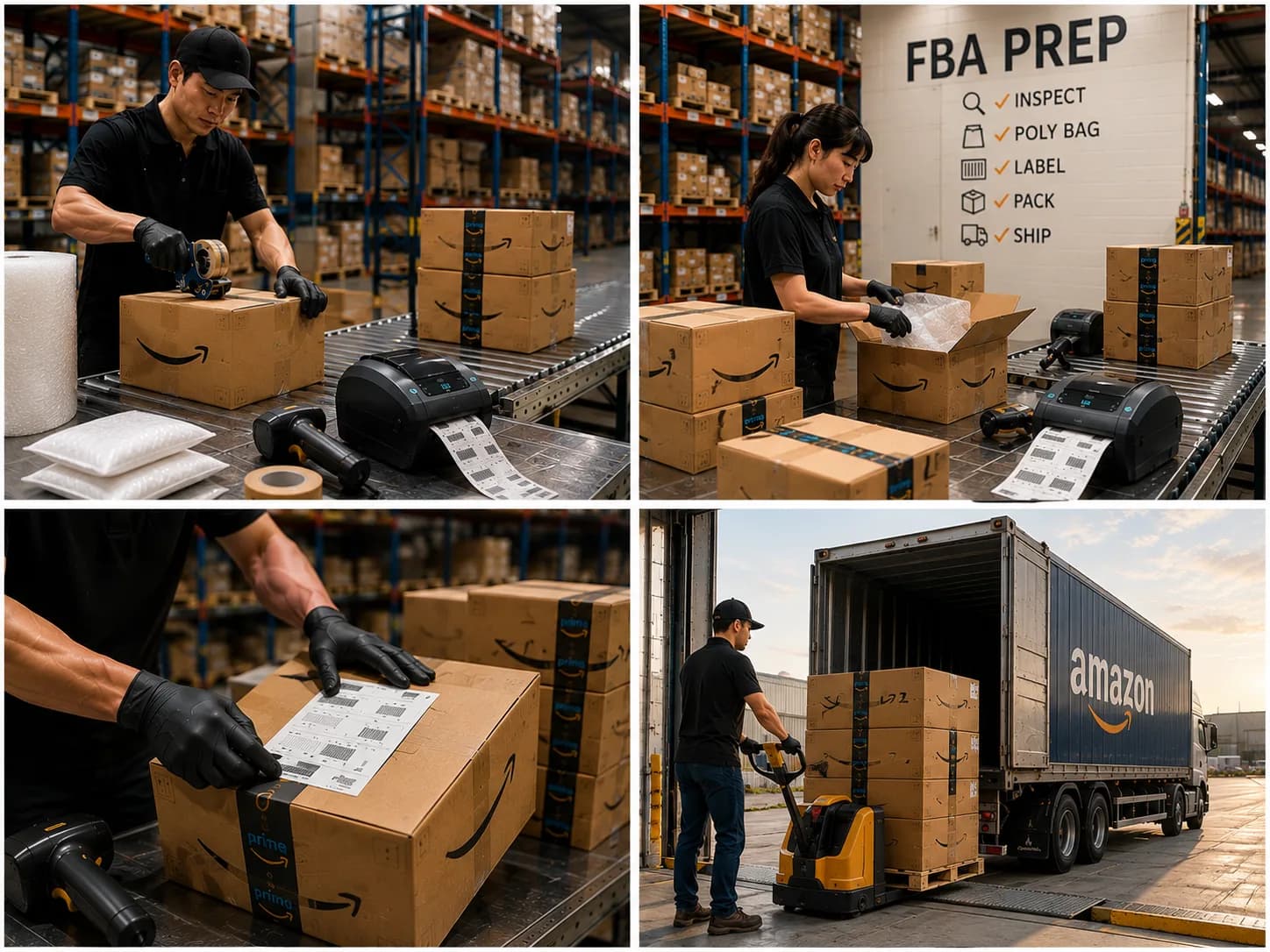
Labeling is where most retail programs go wrong, because the requirements are specific and they differ per account. Price ticketing services and hangtag application have to match the retailer's format and placement. UCC-128 carton labels carry an SSCC-18 serial that has to tie back to the ASN. GS1 carton labeling has fixed data structures — get an application identifier wrong and the label scans as something else at the door.
Retail carton labeling and preparation also means the cartons themselves: dimensions within the account's limits, marks on the correct panels, case-pack and inner-pack quantities as specified, and packing slips placed where the receiver looks for them. We prepare all of it as part of the pick, so an order is compliant when it is built rather than corrected afterwards.
Three kinds of retail label
- Price tickets & hangtags
- The retailer's format, in the retailer's placement.
- UCC-128 carton labels
- An SSCC-18 serial that ties back to the ASN.
- GS1 carton labels
- Fixed data structures — one wrong identifier and it scans as something else.
Distribution Center & Direct-to-Store Fulfillment
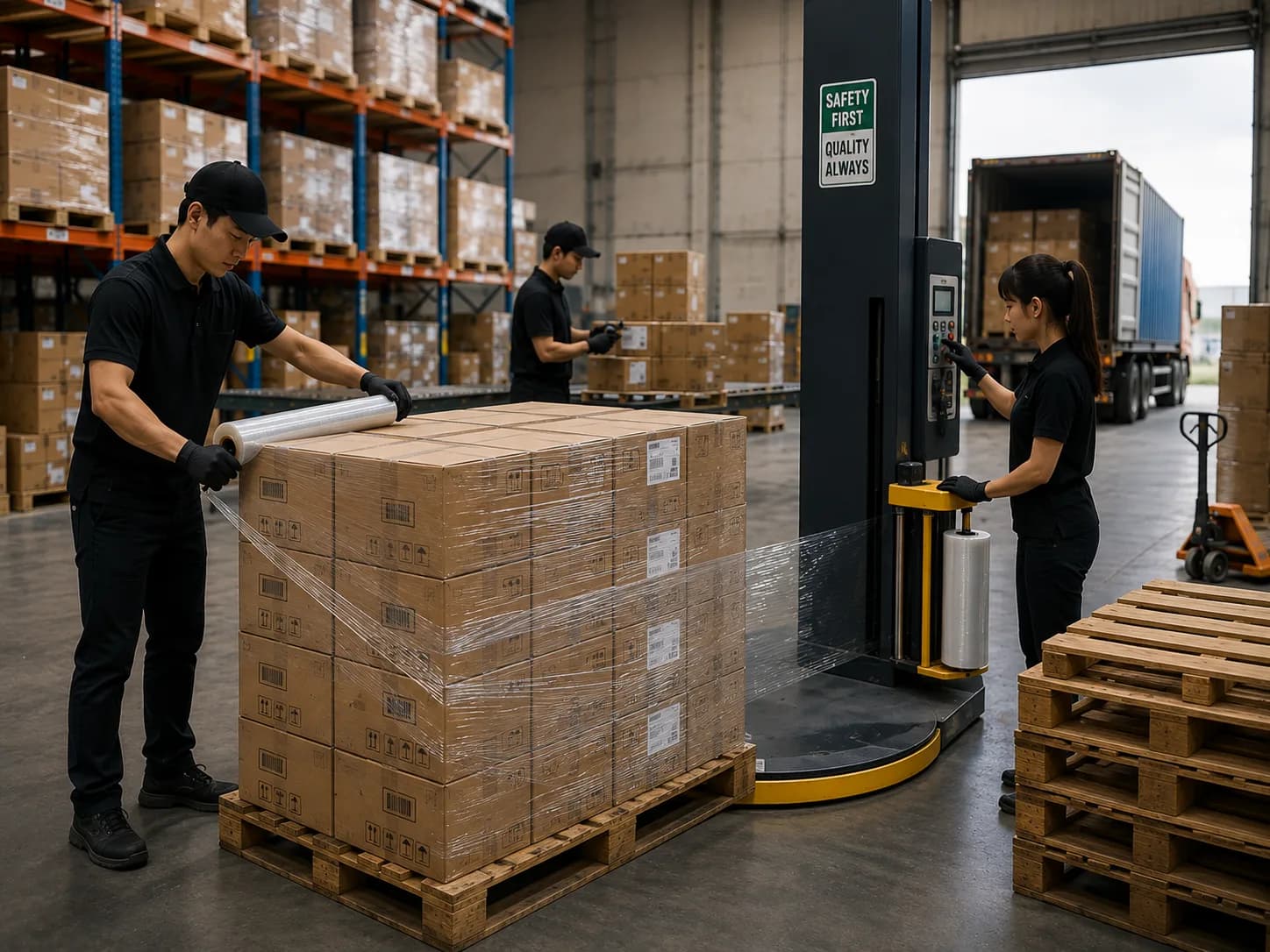
Retail DC fulfillment consolidates an order into full pallets destined for one receiving facility, built to that DC's pallet rules and delivered on a booked appointment. Direct-to-store fulfillment is the opposite shape: the same purchase order split into many small, store-labeled shipments, each with its own paperwork and its own delivery window.
Both run off the same inventory. Retail replenishment orders, initial store sets and seasonal resets are prepared the same way — the difference is how the order is split, labeled and consolidated before it ships.
Two shapes of the same order
- Retail DC
- Full pallets to one receiving facility, on a booked appointment.
- Direct to store
- The same PO split into many store-labeled shipments.
Retail Fulfillment for Growing Brands
Retail is usually a brand's second fulfillment model, added to an operation built for parcels — which is the point at which a retail 3PL earns its keep. The brands and businesses this page is written for:
Retail Fulfillment in Southern California
The work runs through partner warehouses in the Los Angeles, Ontario and Riverside corridor. IDCEA staffs and coordinates the operation; we do not own the buildings, and we would rather say so than imply facilities we do not operate.
For retail programs the position helps twice: imported inventory clears the Los Angeles and Long Beach ports and goes straight into retail preparation without a cross-country leg first, and the Inland Empire sits on the I-10 and I-15 corridors, so outbound LTL and truckload reach western retail DCs on regular schedules.
The corridor
- Los Angeles
- Closest to the LA / Long Beach port complex.
- Ontario
- Inland Empire, on the I-10 and I-15 freight corridors.
- Riverside
- Inland Empire, for space and outbound lanes.
Why brands run retail programs through IDCEA
Retailer compliance support
Each account's routing guide is set up once and applied during picking and packing — where compliance errors are actually prevented.Built for diverse retail channels
Big-box distribution centers, specialty chains and boutique stores each get their own rules, on the same inventory and the same line.Retail-ready on arrival
Floor-ready and display-ready packing options, prepared so the receiving store has less to do before the product reaches the shelf.What you pay for — and what you don't
Billed per activity
- Pick & pack — first item per order, plus each additional item
- Storage — from day 8, by cubic metre and inventory age
- Receiving — per carton or per container
- Returns — per package received, inspection per unit
- Packaging materials — billed on the materials used
- Carrier postage — at the applicable carrier rate
Not billed
- Setup fee
- Monthly minimum
- Basic WMS / OMS access
- Storage for the first 7 days
Three steps to get started
Check the starting rates
See what pick and pack starts at and what drives the rest of the invoice, so you know what to send us.View 3PL pricing →Request a quote
Tell us your SKUs, channels and any special handling, and we'll confirm how the work runs and what it costs for your account.Request a quote →Send your inventory
Ship your first inbound to the Southern California partner warehouse we assign; it's received and counted against your paperwork before any work starts.Common questions
Preparing and shipping orders into retail — distribution centers or individual stores — to the retailer's own requirements. Beyond picking the goods it means routing-guide compliance, retail ticketing, UCC-128 and GS1 carton labels, case and inner packs, an ASN and a booked delivery appointment.
It holds your inventory, takes retail purchase orders by EDI or vendor portal, picks and packs to each retailer's spec, applies tickets and compliant carton labels, builds pallets to the routing guide, transmits the ASN, books the appointment and ships to the DC or direct to store.
DTC picks single units into parcels for consumers under the carrier's rules. Retail prepares cases and pallets against a purchase order under the buyer's rules — labels, tickets, pack configuration, pallet patterns, ASN timing and booked appointments. The work is front-loaded into preparation rather than packing.
Yes. Each account's routing guide is captured once — carton marks, label formats and placement, pallet rules, carrier routing, ASN timing and appointment procedure — and applied on every order for that retailer.
Yes: price tickets, hangtags, retailer-specific item labels and size or color stickers, applied in the format and position the routing guide specifies.
Yes. UCC-128 labels with SSCC-18 serials and GS1 carton labels are generated per shipment and tied to the ASN, so the carton scanned at receiving matches the shipment the retailer was notified about.
Yes — 850 purchase orders in, 856 ASNs out, and 810 invoicing where a retailer requires it. Where an account uses a vendor portal instead of EDI, we work from the portal.
Yes, where the account's program calls for it — floor-ready cartons that open into shelf-ready trays, display-ready packs and pre-priced units.
Yes. DC shipments are consolidated onto pallets built to that facility's rules, tendered to the routed carrier and delivered on a booked appointment.
Yes. Direct-to-store orders are split by location, labeled and documented per store, and shipped within each store's delivery window.
Yes. Case and inner packs are built per account — units per inner, inners per case, solid or mixed — and the same SKU can ship in different configurations to different retailers.
No, and we would be careful with anyone who does. We control preparation — labels, tickets, packs, pallets, ASN and appointment — and set it up to match the routing guide. The receiving decision and any deduction are the retailer's.
In Southern California, through partner warehouses in the Los Angeles, Ontario and Riverside corridor — near the ports for imported inventory and on the Inland Empire freight corridors for outbound retail distribution.
It depends on the prep profile — tickets and labels per unit, pack configuration, pallets per shipment, storage and freight lanes. The 3PL pricing page explains how the charges are built up, and the cost calculator estimates from your own volumes.
Start a quote
Tell us roughly how much you ship and we'll quote retail fulfillment on the published rates — the same ones on the pricing page.
Picking a range just pre-fills the form — you can change it there, and the published rates are the same whichever range you fall in.
Where to go next
3PL fulfillment services
The parent service: storage, pick and pack, multi-channel orders and returns.
3PL pricing
How receiving, storage, pick-pack and freight charges are built up.
B2B fulfillment services
The wholesale side: purchase orders, case and pallet picking, EDI and freight.
DTC fulfillment
The consumer side: each-picking, branded unboxing and parcel delivery.
Warehouse storage services
Hold inventory between production runs and retail ship windows.