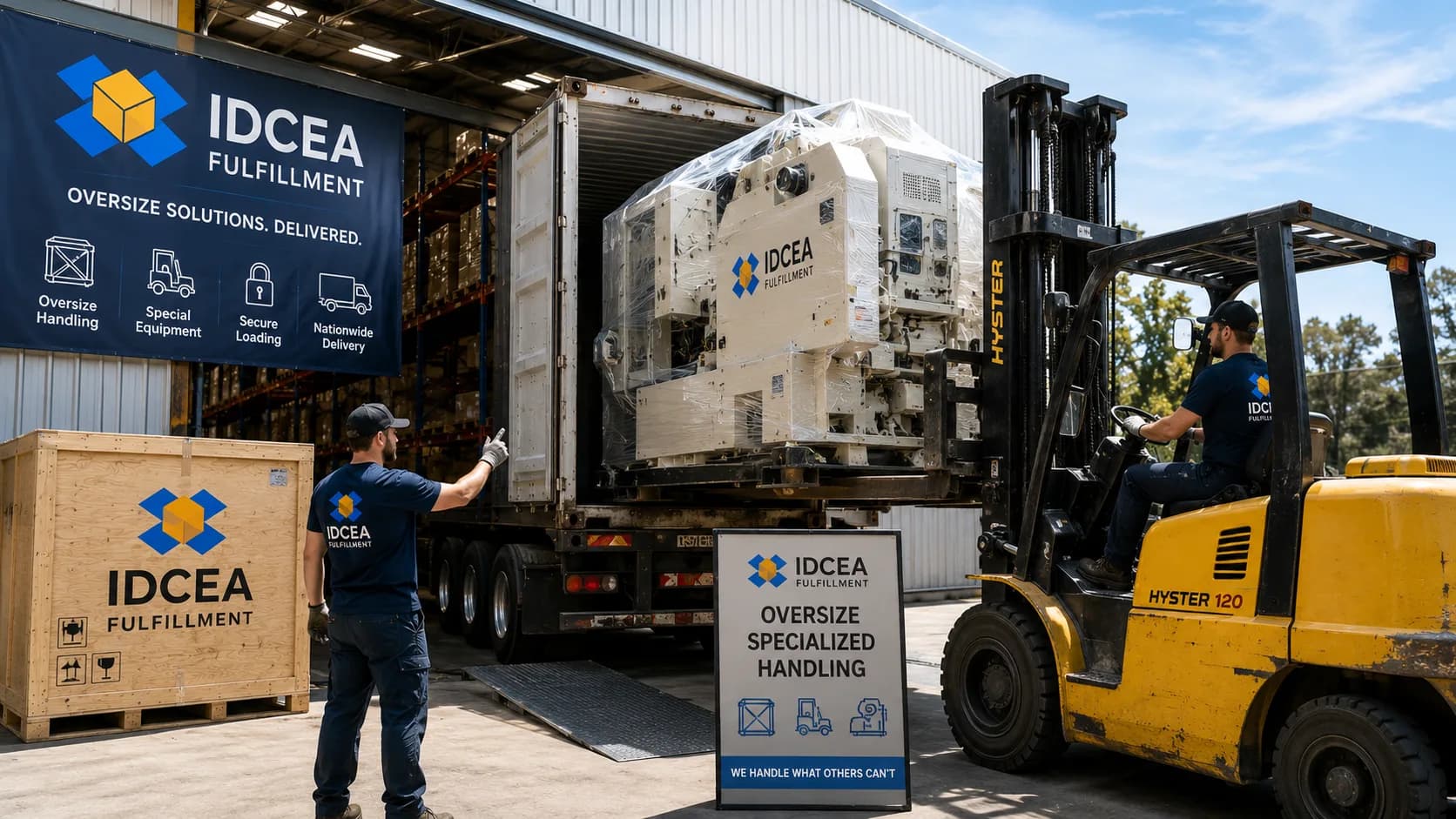
3PL for Oversized Items & Bulky Goods
Oversized item fulfillment for heavy, bulky and awkward goods — bulk storage, forklift and team-lift handling, heavy-duty packaging and LTL freight coordination, from Southern California.
- Bulk & floor storage
- Forklift & team-lift handling
- Heavy-duty packaging
- LTL & FTL coordination
- Large parcel
- LTL
- FTL
Liftgate and white-glove final mile are coordinated through carriers where the lane and product qualify.
Big, heavy and awkward — handled off the parcel line
Oversized fulfillment services exist because large, heavy and awkward products break an operation built for parcels. A boxed treadmill doesn't fit a pick cart, a flat-pack sofa carton doesn't fit a shelf, and a crated machine part doesn't belong on a conveyor. Heavy item fulfillment needs floor and bulk-rack space sized to the SKU, forklift or team-lift handling, packaging engineered for the weight, accurate dimensions and — past a certain size — freight instead of parcel.
IDCEA runs oversized item fulfillment as its own workflow: every oversized SKU measured and weighed on receipt, stored in space that fits it, packed for the trip it actually takes, and rated across parcel, LTL and specialized freight options before anything is booked. As a 3PL for large items and oversize goods — furniture, fitness equipment, industrial parts, large home goods — the work runs through partner warehouses in Southern California.
Oversized Item & Bulky Goods Fulfillment Services
Oversized Inventory Storage
Large item warehouse storage in the format the SKU actually needs — floor positions for tall or irregular goods, bulk racking for palletized cases, and stacked pallet storage where the packaging allows it. Bulky product warehousing is billed on the space a SKU occupies, not on a bin count that never applied to it.
Heavy & Bulky Item Handling
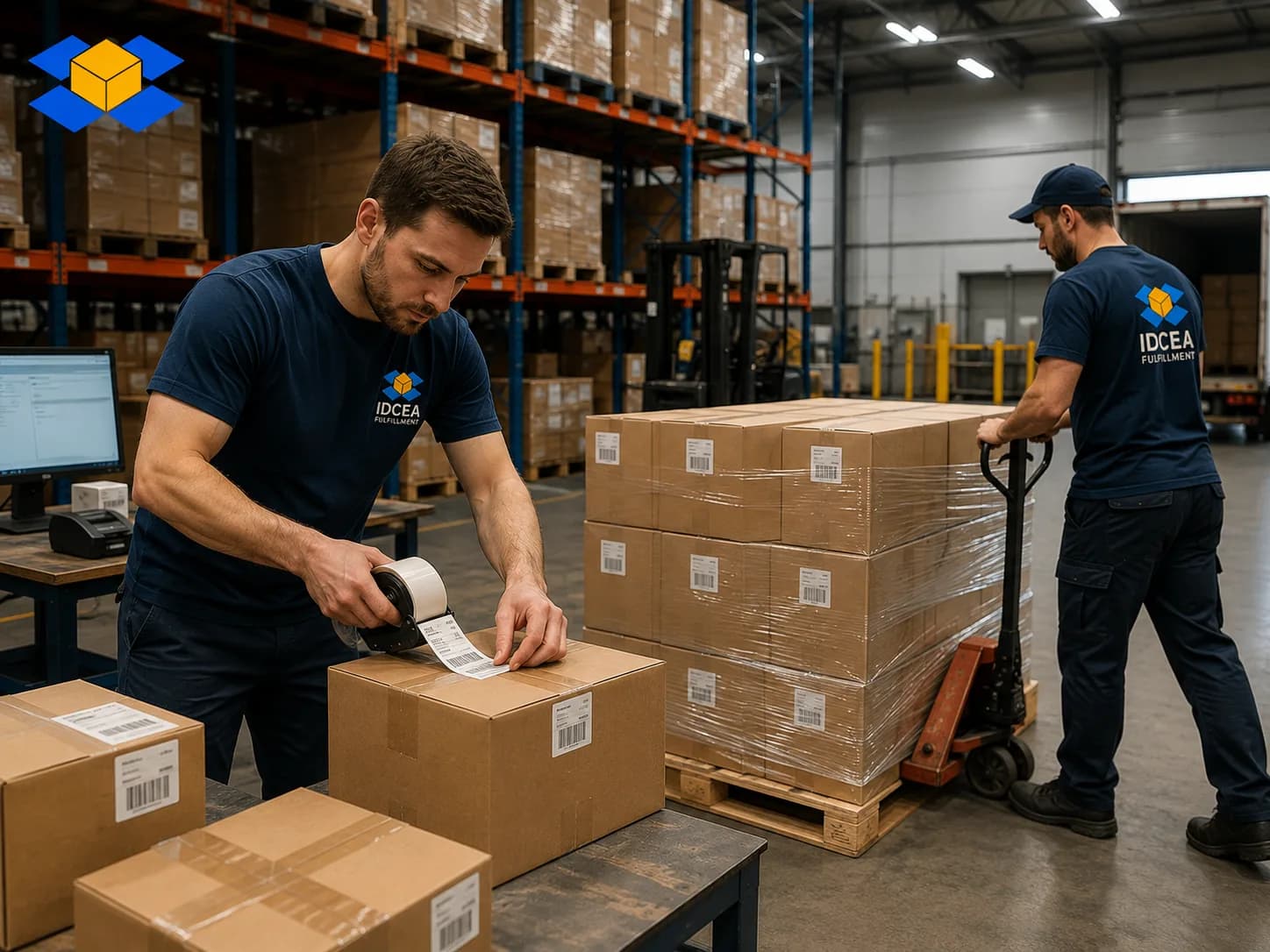
Forklift, pallet jack and two-person team-lift handling for products that can't be picked by one person off a shelf. Heavy item fulfillment moves on equipment rated for the load, with staging space to set an item down rather than balance it.
Heavy-Duty & Custom Packaging
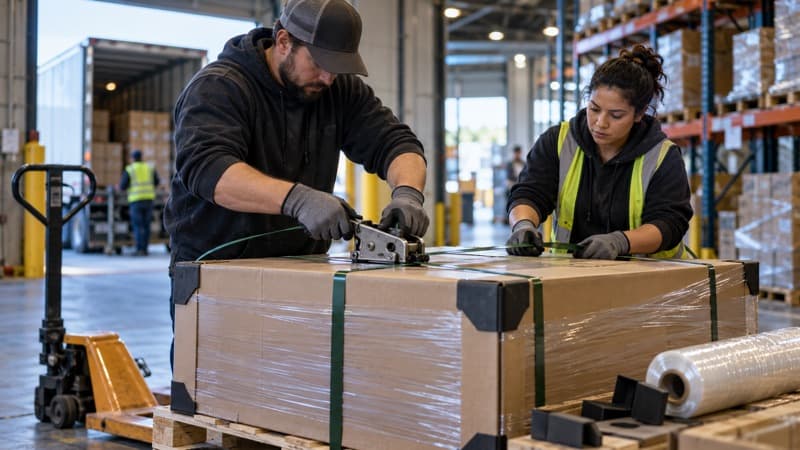
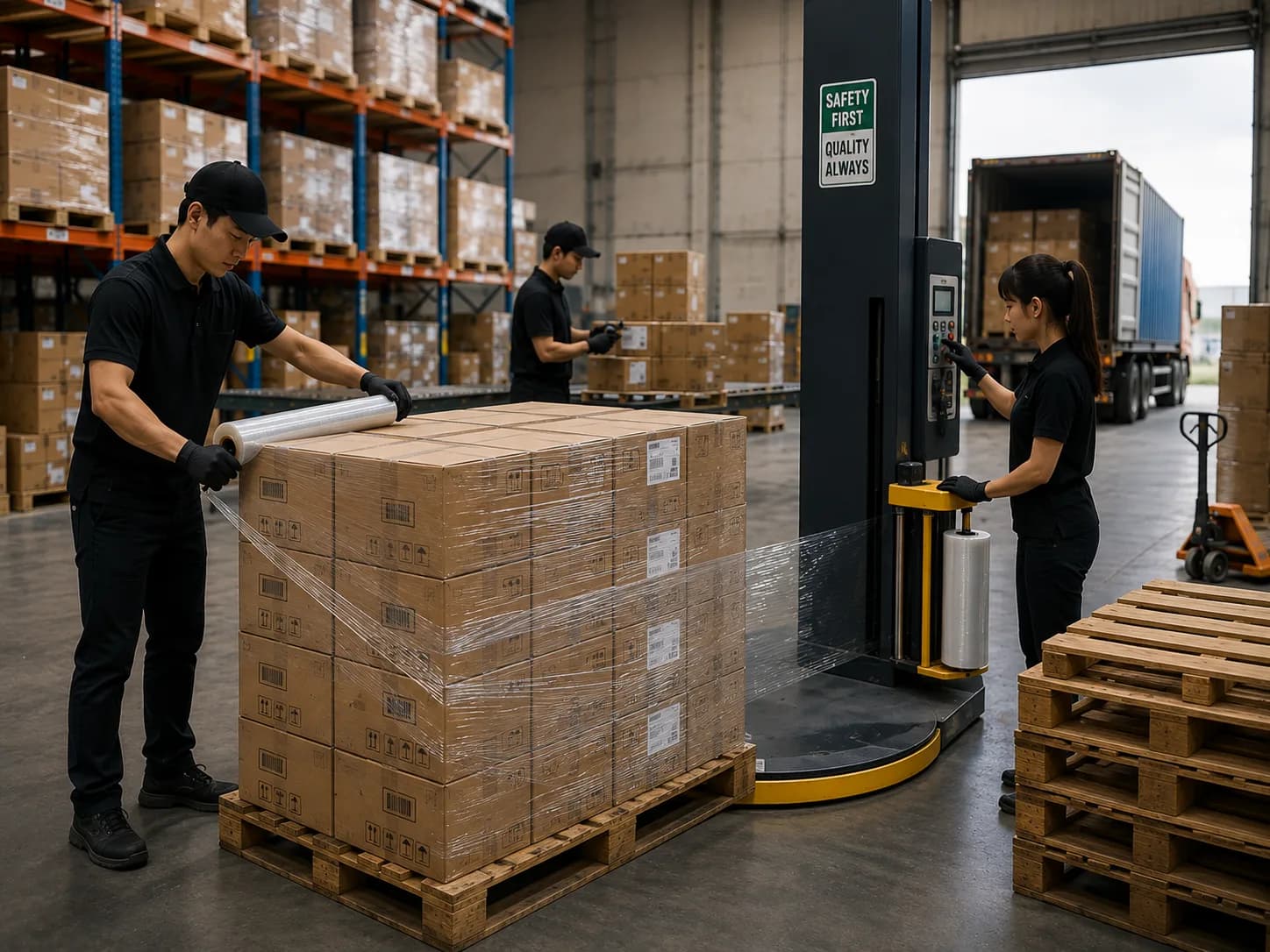
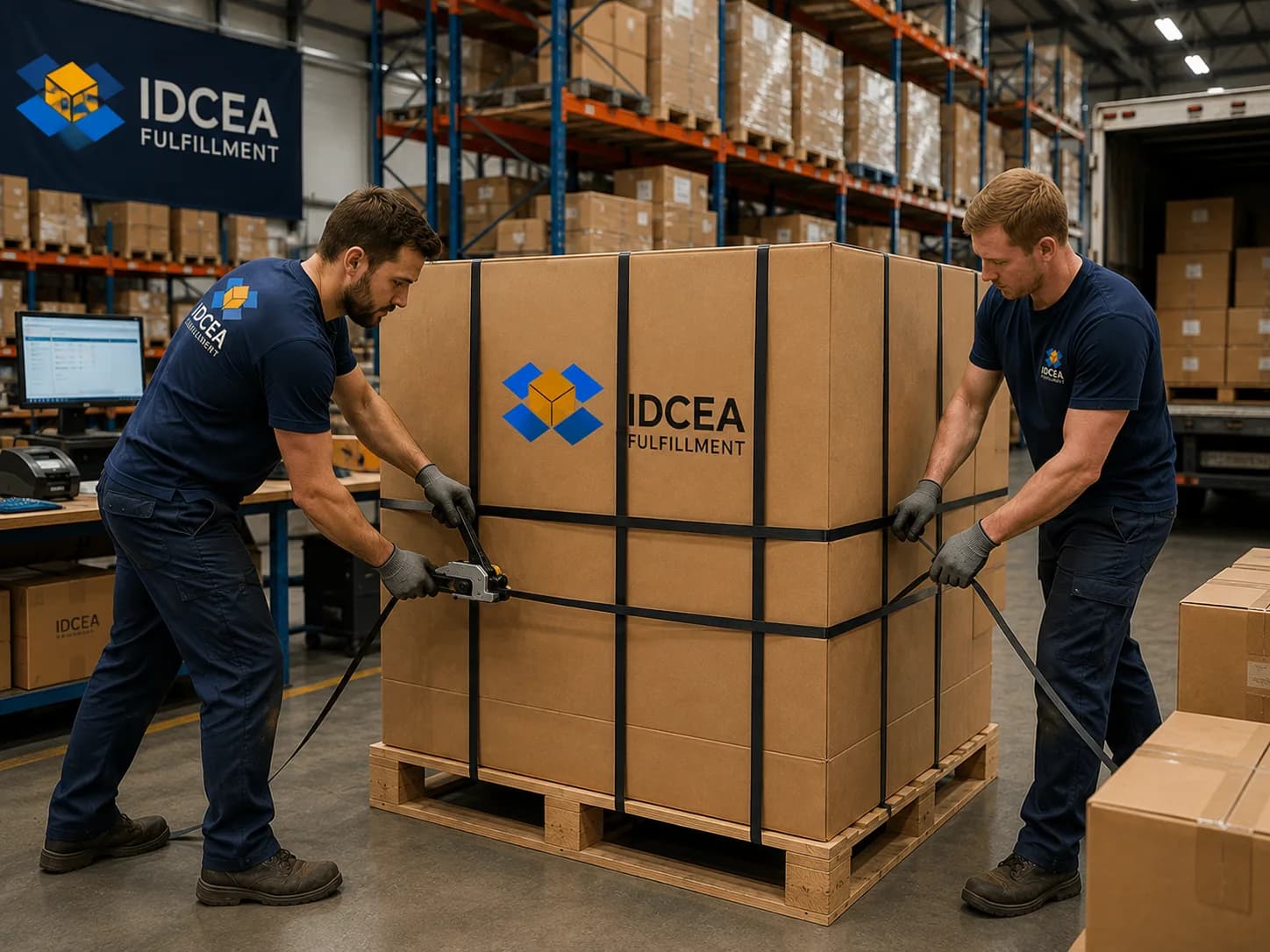
Oversized product packaging built for the weight and the trip: double-wall and heavy-duty cartons, edge and corner protection, strapping, stretch-wrap and pallet decking, plus custom cut and built-up packaging for items no stock box fits.
LTL & Freight Coordination
Freight fulfillment services for shipments past parcel limits — palletized LTL for one to a few pallets, FTL when the order fills a trailer, and specialized carriers where a product needs them. We tender, produce the BOL and return tracking.
Dimensional & Weight Capture
Every oversized SKU is measured and weighed on receipt and the figures are kept on the item record. Large parcel fulfillment is priced on dimensional weight, and freight on class and density, so wrong numbers surface later as re-rate adjustments on your invoice.
Liftgate & White-Glove Delivery Coordination
Liftgate delivery fulfillment for destinations without a dock, and white-glove options such as room-of-choice placement, coordinated through carriers where the lane, the destination and the product qualify. These are booked per shipment, not applied to every order.
How Our Oversized Item Fulfillment Process Works
Assess & store
Inbound oversized goods are measured, weighed and photographed on receipt, then put away in floor, bulk or rack space sized for the SKU.
Protect
Heavy-duty packaging chosen for the item and the mode it will travel in — reinforced cartons, strapping and pallet decking for freight, protective packaging for anything moving as a large parcel.
Rate & book
We compare the parcel, LTL and specialized freight options that fit the dimensions and destination, then book the one that suits the order and produce the label or BOL.
Deliver
Standard dock delivery, or liftgate and white-glove service coordinated with the carrier where the destination requires it and the lane supports it.
Why Oversized Fulfillment Requires a Specialized 3PL
A standard parcel operation is optimized around one assumption: the item fits in a carton a person can lift, on a shelf, onto a conveyor, into a van. Almost every part of the workflow — storage format, pick method, packing station, carrier, rate table — follows from that assumption. Oversized products invalidate it, which is why big and bulky fulfillment is run as a separate discipline rather than an exception inside a parcel line.
| Aspect | Standard parcel 3PL | Oversized fulfillment |
|---|---|---|
| Storage | shelf and bin locations | floor positions, bulk racking and stacked pallets |
| Handling | single-person picking | forklift, pallet jack and team lift |
| Packing | stock carton sizes | heavy-duty, reinforced and custom-built packaging |
| Rating | parcel weight | dimensional weight, freight class and density |
| Transport | parcel carriers | palletized LTL, FTL and specialized carriers |
| Delivery | doorstep drop | dock, liftgate or white-glove placement where required |
Products We Handle
Oversized product fulfillment covers a wide range of goods, and the useful question is rarely the category — it's the dimensions, the weight and how the item is packaged. Products we regularly handle include:
LTL, Freight & Specialized Delivery
Once a product passes a carrier's size or weight limits — or the surcharges past those limits stop making sense — oversized shipping fulfillment moves to freight. Cases or single large items are secured to a pallet, wrapped, labeled and tendered as LTL for partial loads, or FTL where the volume fills a trailer. Smaller-but-still-large items may still ship as large parcel, rated on dimensional weight.
Final-mile services are coordinated through carriers rather than run by IDCEA: liftgate service for destinations without a dock, and white-glove delivery such as room-of-choice placement, available where the carrier serves the lane and the product qualifies. We tell you what a destination supports before the order ships, rather than promising a service level for every address.
How a large item ships
- Large parcel
- Still parcel, rated on dimensional weight.
- LTL
- Palletized, wrapped and labeled for partial loads.
- FTL
- When the volume fills a trailer.
Oversized Fulfillment for Ecommerce Brands & Businesses
Large-product brands usually arrive at a 3PL for oversized products after a parcel-shaped operation stops fitting — storage bills that assume bins, damage on items that were never packed for freight, or a carrier that has quietly reclassified half the catalog. The brands and businesses this page is written for:
Oversized Fulfillment in Southern California
The work runs through partner warehouses in the Los Angeles, Ontario and Riverside corridor. IDCEA staffs and coordinates the operation; we do not own the buildings, and we would rather say so than imply facilities we do not operate.
For oversized inventory the region does two things well. Imported goods clear the Los Angeles and Long Beach ports and go into storage without a cross-country leg on freight that is expensive to move. And the Inland Empire sits on the I-10 and I-15 corridors, so outbound LTL and specialized carriers run regular schedules to the rest of California and the western states.
The corridor
- Los Angeles
- Closest to the LA / Long Beach port complex.
- Ontario
- Inland Empire, on the I-10 and I-15 freight corridors.
- Riverside
- Inland Empire, for space and outbound lanes.
Why large-product brands run oversized freight through IDCEA
Damage-aware handling
Equipment rated for the load, packaging chosen for the mode, and carriers picked for the product — the controllable parts of handling risk, addressed before the item leaves.Carrier rate optimization
We compare the parcel, LTL and specialized freight options that fit each shipment's dimensions and destination to find a practical way to move it.Space sized for large SKUs
Floor, bulk and rack capacity for bulky inventory — without signing your own warehouse lease for a catalog that doesn't fill one.What you pay for — and what you don't
Billed per activity
- Pick & pack — first item per order, plus each additional item
- Storage — from day 8, by cubic metre and inventory age
- Receiving — per carton or per container
- Returns — per package received, inspection per unit
- Packaging materials — billed on the materials used
- Carrier postage — at the applicable carrier rate
Not billed
- Setup fee
- Monthly minimum
- Basic WMS / OMS access
- Storage for the first 7 days
Three steps to get started
Check the starting rates
See what pick and pack starts at and what drives the rest of the invoice, so you know what to send us.View 3PL pricing →Request a quote
Tell us your SKUs, channels and any special handling, and we'll confirm how the work runs and what it costs for your account.Request a quote →Send your inventory
Ship your first inbound to the Southern California partner warehouse we assign; it's received and counted against your paperwork before any work starts.Common questions
Fulfillment for products too large, heavy or awkward to run through a standard parcel operation. Instead of shelf storage and single-person picking, it uses floor and bulk storage, forklift or team-lift handling, heavy-duty packaging, and freight or large-parcel shipping rated on dimensions rather than weight alone.
It receives and measures large SKUs, stores them in space sized for them, picks them with the right equipment, packs them for the mode they'll travel in, rates the shipment across parcel and freight options, and coordinates delivery — including liftgate or white-glove service where a destination needs it.
Furniture and flat-pack cartons, fitness equipment, large home goods, industrial parts and equipment, bulky ecommerce products and oversized master cartons. Fit depends on dimensions, weight and packaging rather than the product category.
There is, and it depends on the building, the equipment and the packaging — so we confirm it against your actual numbers. Send dimensions and weights per SKU and we'll tell you what we can take and how it would be stored and shipped.
Yes — floor positions for tall or irregular goods, bulk racking for palletized cases, and stacked pallet storage where the packaging supports stacking. Oversized inventory storage is charged on the space used.
Yes. Heavy and palletized goods move on forklifts and pallet jacks, and items that can't be picked alone are handled as a two-person team lift.
Yes. Shipments past parcel limits are palletized, wrapped and tendered as LTL for partial loads or FTL where the order fills a trailer, with the BOL produced and tracking returned to you.
We coordinate liftgate delivery with the carrier where the destination has no dock and the lane supports it. It's booked per shipment as an accessorial, not applied to every order.
Yes, where the carrier serves that lane and the product qualifies — including room-of-choice placement. White-glove service is arranged through carrier partners rather than run by IDCEA, and availability varies by destination.
Yes: double-wall and heavy-duty cartons, edge and corner protection, strapping, stretch-wrap and pallet decking, plus custom-built packaging for items no stock carton fits.
Large parcel shipments are usually rated on dimensional weight, and freight on weight, freight class, density and lane — plus accessorials such as liftgate or residential delivery. That's why we measure and weigh every SKU on receipt: wrong figures show up later as carrier re-rate adjustments.
Yes. Oversized SKUs are fulfilled from the same order flow as the rest of your catalog — orders come in from your store or marketplace, and each one is routed to parcel or freight based on its dimensions and destination.
In Southern California, through partner warehouses in the Los Angeles, Ontario and Riverside corridor — near the ports for imported oversized inventory, and on the Inland Empire freight corridors for outbound LTL.
The 3PL pricing page explains how receiving, storage, pick-pack and freight charges are built up, and the cost calculator gives an estimate from your own volumes. For large SKUs, send dimensions and weights and we'll quote against them.
Start a quote
Tell us roughly how much you ship and we'll quote oversized fulfillment on the published rates — the same ones on the pricing page.
Picking a range just pre-fills the form — you can change it there, and the published rates are the same whichever range you fall in.
Where to go next
3PL fulfillment services
The parent service: storage, pick and pack, multi-channel orders and returns.
3PL pricing
How receiving, storage, pick-pack and freight charges are built up.
B2B fulfillment services
Case and pallet orders, retailer routing compliance and LTL/FTL freight.
Ecommerce fulfillment
The parcel-sized half of the catalog — Shopify, Amazon and marketplace orders.
Warehouse storage services
Bulk and long-term storage for inventory that isn't shipping this month.