
Bulk Order Fulfillment: Running Large-Quantity Orders Without Stalling Daily Shipping
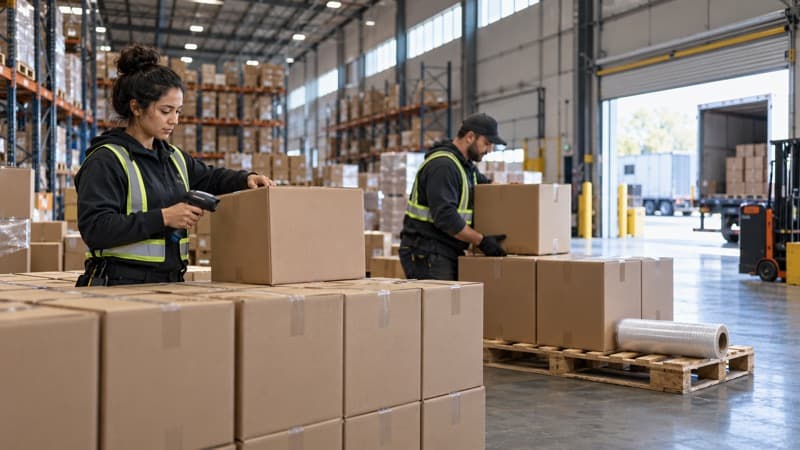
Bulk orders are too big for the parcel line and often too informal for full wholesale. How a 3PL reserves stock, picks by the case, chooses parcel or freight and keeps large orders from crowding out daily shipping.
A bulk order is the one that does not fit the parcel line: 300 units for a corporate gifting program, 40 cases for a chain of boutiques, a reorder from a distributor that wants everything on two pallets by the end of the week. Bulk order fulfillment is the work of picking, packing and shipping those large-quantity orders accurately without stalling the hundreds of small orders moving through the same building that day.
It sits between two models most brands already understand. It is not quite DTC, because the quantities are too large to pick by the each and ship in mailers. It is not always formal wholesale either, because many bulk buyers do not send EDI purchase orders or routing guides.
What counts as a bulk order
There is no industry cutoff, but a warehouse treats an order as bulk when it changes how the work is done:
- The quantity is large enough to pick by the case instead of by the unit.
- The order fills more than one carton, often more than a dozen.
- It may ship as freight — a pallet or several — rather than as parcels.
- It draws down a meaningful share of on-hand stock for that SKU in a single release.
Corporate and promotional orders, event shipments, reseller and boutique opening orders, marketplace wholesale buyers and distributor reorders all land in this category.
Decision 1: Reserve the stock before you promise a date
The most common bulk-order failure is not on the floor. It is a sales promise made against inventory that daily DTC orders are consuming at the same time. If 400 units are on hand and a bulk buyer orders 350, the next day of web orders can leave the bulk order short before anyone picks it.
The fix is allocation. When the bulk order is accepted, the quantity is reserved in the warehouse management system (WMS) so it is no longer available to other channels. If you want the order to ship complete, say so in writing — the warehouse needs to know whether to hold for the full quantity or ship what is available and backorder the rest. A shortage handled by default is usually handled the wrong way.
Decision 2: Pick by the case where the packaging allows it
Picking 600 units one at a time is slow and invites count errors. Picking 25 cases of 24 is fast and easy to verify. Whether a bulk order can be case-picked depends on how your product arrives and how it is set up in the system:
| Setup | What it means for a bulk order |
|---|---|
| Master case quantity recorded per SKU | Warehouse can pick full cases and only break a case for the remainder |
| Inner packs defined | Remainders can be picked in inners instead of eaches |
| Only each-level data | Every unit is counted by hand, which takes longer and leaves more room for error |
If you have never told your 3PL your case and inner-pack quantities, do it before your first large order.

Decision 3: Parcel or freight
Once the order is picked, it leaves as either a stack of parcels or as palletized freight. The tipping point depends on carton count, total weight and where it is going:
- A handful of cartons to one address usually ships as a multi-piece parcel shipment, each box labeled and tracked under the same order.
- Dozens of cartons or heavy cases often cost less and arrive in better shape as one or two pallets moving by LTL.
- A full trailer's worth moves as truckload.
Multi-carton parcel orders need every box labeled and tied back to the order so a missing carton can be traced. For pallets, build height and weight limits decide how many pallets you pay for — see how case picks, pallet builds and LTL move B2B orders.
Decision 4: Keep bulk work from crowding out daily orders
A 2,000-unit order released at 10 a.m. into the same pick queue as the day's web orders can push small orders past the carrier cutoff. Warehouses handle this in a few ways:
- Scheduling the bulk order into a quieter window or across several days, agreed in advance.
- Separate staging space so finished cartons or pallets do not block pack stations.
- A dedicated pick wave for the bulk order instead of mixing it into regular waves. For contrast, Inside an Ecommerce Order Fulfillment Service: The Seven Steps From Order Drop to Carrier Scan shows how tightly the everyday flow is timed — which is exactly what a surprise bulk release disrupts.
What to send your 3PL with every bulk order
A short, written order brief prevents most problems:
- SKU and quantity list, with the unit of measure (eaches, inners or cases).
- Ship-complete or ship-available, and what to do with any shortage.
- Ship-by and deliver-by dates.
- Delivery details: business or residential, dock or liftgate needed, appointment required or not.
- Packing requirements: mixed or single-SKU cartons, carton labels or marks, packing list inside or outside.
- Paperwork: whether the buyer needs a bill of lading copy, packing list or proof of delivery returned.
Recurring bulk buyers should get their own standing profile in the warehouse system so this brief only has to be written once.
Running bulk orders from Southern California
IDCEA runs bulk and wholesale orders as part of its B2B fulfillment services: case and pallet picking with counts checked before a pallet is closed, palletizing and shrink-wrap, and LTL or FTL booked to the buyer's requirements. The work runs through partner warehouses in the Los Angeles, Ontario and Riverside corridor — near the Los Angeles and Long Beach ports for imported inventory, and on the Inland Empire freight corridors for outbound. If a bulk order is on the way, contact us with the SKU list and delivery details and we can talk through how it would run.