
DTC Fulfillment in Ontario, CA: Running Direct-to-Consumer Orders From the Inland Empire
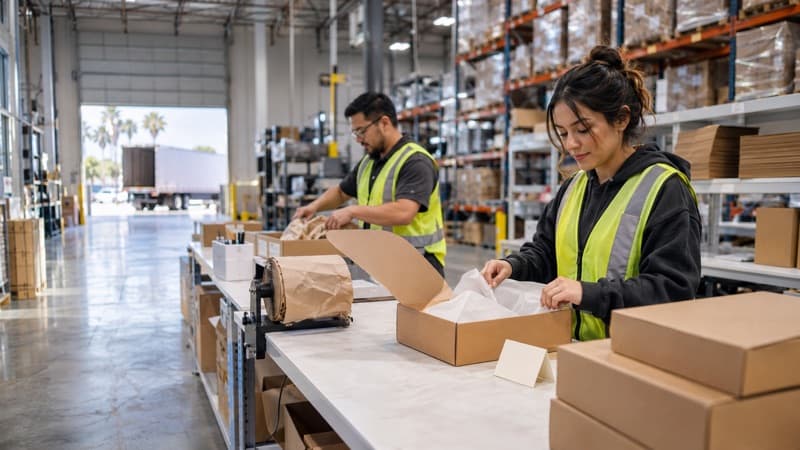
What running DTC fulfillment out of Ontario, California actually changes: port-to-warehouse inbound, how a direct-to-consumer order moves through the building, returns, and what to ask a provider first.
"DTC fulfillment Ontario" is usually typed by one of two people: a direct-to-consumer brand already based in the Inland Empire that wants its inventory nearby, or a brand somewhere else that keeps hearing Ontario, California named as a place to ship from. Both want the same answer — what does running DTC orders out of Ontario actually change, and what should you check before you move stock there?
Why Ontario, CA shows up in DTC fulfillment searches
Ontario sits in the western Inland Empire, on the I-10 and I-15 freight corridors, inland from the Los Angeles and Long Beach ports. The region is one of the densest warehouse markets in the country, which means two practical things for a direct to consumer brand:
- Imported inventory has a short trip. Containers that clear the San Pedro Bay ports reach an Ontario-area warehouse by drayage, without a cross-country leg before the stock can sell.
- Parcel carriers are already there. Carriers run regular pickups from warehouses across the region, so an Ontario building is not a remote outpost for outbound parcels.
What it does not do is make delivery faster on its own. Transit time belongs to the carrier and the service you buy. Location changes which shipping zones your customers fall into; our look at DTC fulfillment from Southern California, shipping zones and inventory placement covers when one West Coast location is enough and when it isn't.
How a DTC order moves through an Ontario warehouse
Direct-to-consumer fulfillment is single orders, usually one to three units, each one opened by the person who paid for it. Through an Ontario-area warehouse the flow looks like this:
- Inbound. Containers or supplier deliveries are received against your packing list, counted by SKU and put away in a recorded location.
- Order drop. Orders flow in from your store or marketplace through an integration, not a spreadsheet.
- Pick and verify. Each unit is located and scan-verified at the shelf, so the right size and color goes in the box.
- Pack to your spec. Your boxes or mailers, tissue, inserts and any kit or bundle rules are applied exactly as written.
- Label and hand off. The carrier and service are compared per parcel, the label is bought, and tracking is written back to your store.
- Returns. Returned items come back to the same building, get inspected and are dispositioned.

What to check before moving DTC inventory to Ontario
Being in Ontario is an address, not a service level. Ask any provider in the area:
| Question | What a clear answer sounds like |
|---|---|
| Is this a DTC workflow or a pallet operation? | Each-picking, scan verification and written pack specs per SKU. |
| When is the daily order cutoff, and when does the carrier pick up? | A specific time, and what happens to orders that land after it. |
| Can you pack to my branded spec? | Your materials, your insert rules, a photo-approved sample before go-live. |
| How do kits and bundles work? | Built ahead of demand as one SKU, or assembled at pick — and which costs what. |
| How are returns handled? | Inspected against your criteria, with a recorded reason and disposition. |
| Who owns the building? | A straight answer — many Inland Empire providers operate partner space. |
Cutoff times deserve their own conversation; Order Cutoff Times: How Same-Day Ship Windows Work at a 3PL explains what sits behind the number on a quote.
Brand moments that run through the same building
DTC brands ship more than customer orders. Creator seeding boxes, PR mailers and gifted product all leave from the same inventory, and they are worth planning as their own order type rather than a favor squeezed in at the end of the day. Influencer Seeding and PR Mailers: Running Creator Shipments Through Your 3PL covers how to set those up so they don't drain sellable stock without a record.
Returns: where an Inland Empire location quietly helps
Returns are where DTC margin leaks. When the items come back to the same building that shipped them, the inspection can be checked against the original order, the unit can go straight back to a pick location if it passes, and anything that fails is set aside with a reason instead of piling up in a corner.

A good returns process for a direct to consumer brand records three things per return: the reason the customer gave, the condition the warehouse found, and the disposition — restock, quarantine for review, recovery, or write-off.
Where Ontario matters less than you'd think
- Customers on the East Coast. A single Ontario location ships them in higher zones. That may be fine for your margin; it is not something the warehouse can change.
- Very low order volume. If you ship a handful of orders a week, process and packing quality matter more than the city.
- Goods that don't arrive through the San Pedro Bay ports. The short drayage leg only helps if your containers come in through Los Angeles or Long Beach.
How IDCEA runs DTC fulfillment in Ontario and the Inland Empire
IDCEA provides direct to consumer (DTC) fulfillment through partner warehouses in the Los Angeles, Ontario and Riverside corridor. IDCEA staffs and coordinates the operation; we do not own the buildings. Your packaging and kit recipes are set up once, orders are picked, scan-verified and packed to them, shipped on a rate-shopped label with tracking pushed back to your store, and returns are received, inspected and dispositioned against your criteria.