
Pick and Pack Pricing: How First-Item and Additional-Item Fees Add Up Per Order
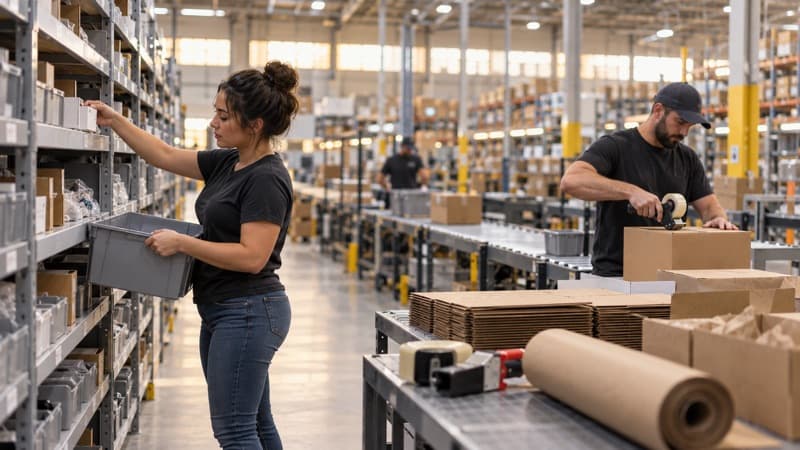
How pick and pack pricing works at a 3PL: the first-item and additional-item fees, why unit weight sets the band, how units per order change the bill, and what sits outside the fee.
Pick and pack pricing is the per-order fee a 3PL charges to pull your units off the shelf, pack them and hand the parcel to a carrier. At IDCEA it is built from two numbers: a first-item fee for the first unit in an order and an additional-item fee for every further unit in the same order, with both rates banded by the weight of a single unit. Packaging materials and carrier postage are separate lines.
That structure sounds simple, but it is where most quote comparisons go wrong. Two 3PLs can show similar headline numbers and still produce very different invoices for the same month of orders, because they count different things as "one pick".
The two numbers that make up a pick and pack fee
Most ecommerce 3PLs price picking and packing in one of three ways:
| Model | How an order is charged | Where it gets confusing |
|---|---|---|
| Per order + per item | A fee for the order, plus a fee for each unit | Whether the first unit is included in the order fee |
| First item + additional item | A higher fee for unit one, a lower fee for each unit after it | Which weight band applies when units differ |
| Per pick line | A fee for each SKU line, regardless of quantity | Five units of one SKU may cost the same as one |
IDCEA uses the second model. An order's pick and pack cost is the first-item fee plus the number of additional units multiplied by the additional-item fee, both taken from the same weight band. Pick and pack starts from $1.50 for the first unit in an eligible standard order, with additional units from $0.40 each. The full current figures are on our 3PL pricing page.

Why unit weight decides the band
Rates step up with the weight of one unit, not the weight of the whole order. That matters in two ways.
- A unit just over a band boundary costs more on every order. If your product weighs slightly more than a band limit once it is in its retail box, every order you ship is charged at the next band up. Packaging changes that trim a few ounces can move a SKU back down.
- The weight on file has to be right. The band is applied from the item data in the warehouse system. If the weight was estimated at onboarding, or a supplier changed the packaging, the band can be wrong without anyone noticing. Getting weights and dimensions captured correctly is part of the first inbound — our guide to business inventory storage setup: item data, first inbound and the first 30 days walks through what to send and what gets measured on arrival.
Units above the top weight band, and oversized products, are quoted individually. For oversized items the rating can use actual or dimensional weight, whichever is greater.
Units per order: the other half of the bill
Because every unit after the first adds the additional-item fee, the shape of your orders matters as much as their count.
- Single-unit orders pay the first-item fee only. A catalog dominated by one-item orders has a pick and pack cost close to the headline rate.
- Multi-unit orders spread the first-item fee across more units. The total per order rises, but the cost per unit shipped falls.
- Bundles assembled ahead of demand can be picked as one unit rather than several. If the same three items ship together most of the time, kitting them during a quiet week changes how the order is counted at peak.
When you compare quotes, run the same sample month of orders — real order counts and real units per order — through each provider's model. A per-order rate that looks cheap can lose to a first-item model once your average basket is above one unit, and the reverse is also true.
What pick and pack pricing does not include
The pick and pack fee covers the labor of picking, packing and handing over the parcel. Other lines sit next to it on the invoice:
- Packaging materials — billed on the materials the order actually uses. Carton choice also drives postage, because carriers bill on dimensional weight when a box is large for its contents.
- Carrier postage — quoted separately and based on weight, dimensions and destination.
- Storage — quoted against your inventory volume and how long stock sits.
- Special handling — inserts, gift wrap, custom packing instructions or kitting are scoped and quoted on their own.
Keeping these lines apart is deliberate: it lets you see which part of your cost moves when order mix, product weight or storage volume changes.
What to send for an accurate pick and pack quote
A useful quote comes from your order profile, not a single headline number. Before asking for one, gather:
- Monthly order volume, and how it changes in peak months
- Average units per order, or a sample export of recent orders
- Each SKU's packed unit weight and dimensions
- Packaging requirements — standard cartons, mailers, branded boxes or inserts
- Sales channels the orders come from
With that, the first-item and additional-item fees can be applied to your real orders rather than an average. IDCEA's ecommerce fulfillment runs through partner warehouses in the Los Angeles, Ontario and Riverside corridor in Southern California, and quotes are built on exactly this profile. If you are also weighing the rest of the invoice, our line-by-line breakdown of 3PL fulfillment costs covers storage, receiving and shipping alongside pick and pack.