
Split Shipments in DTC Fulfillment: When One Order Leaves in More Than One Parcel
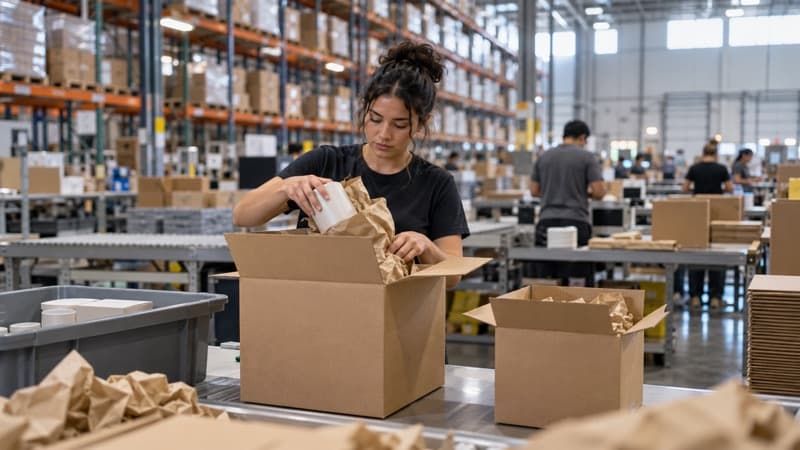
Why DTC orders split into multiple parcels, what each split adds to cost and support load, and the four rules to give your 3PL before it happens.
A customer orders a hoodie and a mug. The hoodie is on the shelf; the mug is on a container that lands next Tuesday. Your 3PL now has a choice to make on your behalf: ship the hoodie today and the mug later, or hold the whole order until both are on hand. That choice is a split shipment, and how it gets made — by rule, by default, or by whoever happens to be on shift — shapes your shipping bill, your support queue and how the order feels to the person waiting for it.
Why a DTC order ends up in more than one parcel
Split shipments are not the same thing as a multi-carton order. A multi-box shipment leaves the building all at once because the goods simply don't fit in one box. A split shipment leaves at different times, and the cause is almost always one of these:
- Partial availability. One line is in stock and another is not — a backorder, a preorder line, or a SKU that was counted short.
- Inventory on hold. A unit is physically present but sitting in a quarantine or damaged-stock location, so the system can't allocate it.
- Different handling paths. A fragile or oversized item packs at a different station, or ships by a different carrier service, than the rest of the order.
- Mixed fulfillment sources. Part of the order ships from your 3PL and part from a supplier drop ship or a second warehouse.
Every one of these is normal. The problem starts when the split happens with no rule behind it.
The cost side: what a split actually adds
A split order does not cost "a bit more shipping." It repeats most of the per-order work:
| Cost line | Single shipment | Split into two |
|---|---|---|
| Pick and pack | One order, first pick plus additional units | Usually billed as two orders, so two first picks |
| Packaging | One box or mailer | Two, often both partly empty |
| Postage | One label | Two labels, each with its own minimum charge |
| Support contact | Low | Higher — "Where's the rest of my order?" |
| Return risk | Normal | Slightly higher if the late item arrives after the customer has moved on |
Because parcel rates have a floor, two small packages almost always cost more than one medium one. Your packaging and postage are billed on top of fulfillment either way, so the extra label is real money, not a rounding error.

The customer side: when splitting is the better experience
The cheapest answer — always hold until complete — is not always the right one. Holding has its own cost: the customer sees "processing" for days, and a delayed order is a common trigger for a support ticket or a cancellation.
Splitting tends to make sense when the in-stock item is the main purchase, the backordered line has a long or uncertain arrival date, or the order is time-sensitive. Holding tends to make sense when the missing item arrives within a day or two, when the items only make sense together (a kit, a set), or when a second label would erase the margin.
Write the rule down before the first split
A 3PL can apply almost any policy consistently — but only if you have actually decided one. The useful version fits on half a page and answers four questions.
1. When is an order allowed to split? Common patterns are "never split", "split only if the backordered line is more than N days out", or "split only above a set order value." Pick one as the default.
2. Who pays for the second shipment? Decide whether you absorb it, pass it to the customer as a choice at checkout, or only split when the customer opts in.
3. Which items never travel alone? Kits, bundles, sets and anything with a companion part should be flagged so the warehouse system will not release half of them.
4. How is the customer told? The first shipment notification should say clearly that more is coming, and the second one should reference the same order number. Most "missing item" tickets come from a confirmation email that looked final.
What your 3PL needs from you to apply it
The rule only works if it is configured where orders are actually allocated, not kept in a document. Before turning it on, make sure your fulfillment partner has:
- Order-level flags from your store — for example, a tag for "ship complete" or "ok to split" — mapped to a hold or release rule in their warehouse management system (WMS).
- Kit and bundle definitions so component SKUs are reserved together.
- Expected arrival dates for inbound stock, so "hold" orders release automatically when the receipt is put away instead of waiting for someone to notice.
- A tracking write-back that can post two tracking numbers to one order, so your storefront and support team both see the full picture.
- A review cadence for orders that have been on hold longer than your threshold, so nothing quietly ages in a queue.
If your partner bills per order rather than per shipment, ask how a split is counted.
Then track one number: split rate, the share of orders that ship in more than one parcel. If it climbs because one SKU keeps running short, the fix sits upstream in reorder points, not at the packing station.
Bringing it together
Split shipments are a normal part of DTC fulfillment; the goal is to make every one of them intentional. Decide when an order may split, who pays, which items stay together and what the customer is told — then make sure the rule lives in the systems that release orders, not just in an email thread. If you are reviewing how your current setup handles partial availability, our team can walk through it with you.