
Overseas Warehousing in the U.S.: How Much Stock to Hold Stateside and How It Moves
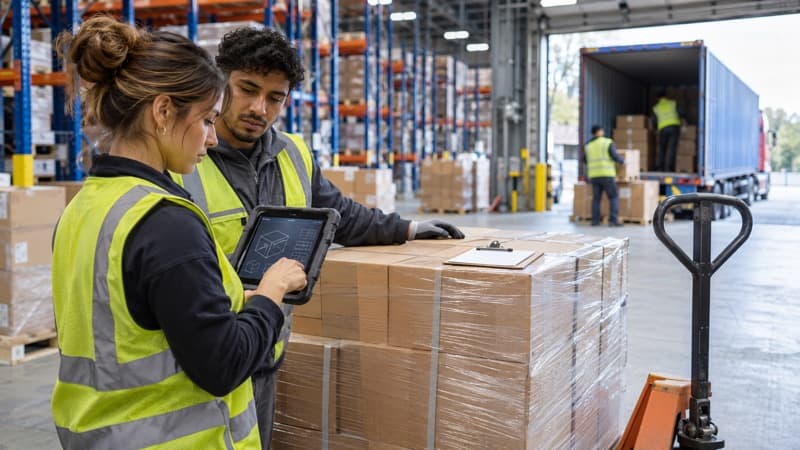
Overseas warehousing means holding part of your inventory in a U.S. warehouse instead of shipping each order from abroad. How to size the stock you send, receive it cleanly and run ecommerce, FBA and wholesale from one U.S. inventory.
Overseas warehousing means holding a share of your inventory in a warehouse inside the country where your customers are, instead of shipping every order from the factory or your home market. For a brand based in Asia or Europe selling to U.S. buyers, it turns an international parcel into a domestic one: the goods cross the ocean once, in bulk, and each order then leaves from a U.S. building.
That part is simple. The hard part is the storage plan behind it — how much to send, how often, how to keep it from aging on a rack, and how it moves between storage, your own orders and Amazon. This piece is about those warehousing decisions. If you want the order-by-order side instead, our guide to ecommerce fulfilment in the U.S. for overseas brands walks through it.
What an overseas warehouse actually does
Strip away the term and an overseas warehouse is ordinary warehousing performed for a seller who isn't in the country:
- Receiving the container or pallets once they have cleared customs and been delivered
- Counting in against the packing list or advance ship notice, and reporting shortages or damage
- Putaway to pallet or shelf locations, so every SKU has an address
- Storage, charged on the space occupied and how long it's held
- Release — by the pallet to a retailer or Amazon, or unit by unit as ecommerce orders
What it does not include matters just as much. Customs brokerage and international freight are handled by your broker or forwarder; the warehouse starts at the dock door. Sellers who assume the "overseas warehouse" also clears their goods find that out the week a container lands.
Direct shipping vs. holding stock in the U.S.
| Ship each order from origin | Hold stock in a U.S. warehouse | |
|---|---|---|
| Freight | Many small international parcels | One bulk ocean or air move, then domestic parcels |
| Delivery to the buyer | International transit and tracking | Domestic transit from inside the country |
| Returns | Usually not worth sending back abroad | Come back to a U.S. address you control |
| Cash tied up | Stock stays at home until it sells | Stock is committed before it sells |
| What can go wrong | Slow delivery, lost parcels, unhappy buyers | Over-sending, aging inventory, storage cost |
The trade is clear: you swap per-order international shipping for inventory risk. That's why the storage plan, not the warehouse, decides whether the model pays.

How much stock to keep stateside
The question every overseas seller gets wrong at least once is quantity. Send too little and you stock out while the next container is still on the water; send too much and you pay to store slow movers for months.
A workable way to size it:
- Start from replenishment lead time. Count the full cycle — production, booking, ocean transit, port, customs and delivery to the dock — not just sailing days. That cycle is how long U.S. stock has to cover sales.
- Cover that window plus a buffer. Multiply average weekly sales by the weeks in the cycle, then add safety stock for the SKUs where a stockout hurts most.
- Split by velocity. Fast movers earn a place in the U.S. building. Long-tail SKUs that sell a few units a month are often cheaper to hold back at origin, or to send in smaller mixed shipments.
- Plan for peaks separately. A Q4 build-up is a one-off storage decision, not a new baseline. Book it as seasonal volume so it doesn't quietly become permanent.
Storage is billed on space and time, so a pallet that sits for six months costs far more than one that turns in six weeks. Our breakdown of what long-sitting SKUs cost in storage shows how that adds up.
Receiving: where overseas stock is won or lost
The first time anyone physically checks an overseas shipment is often at the U.S. dock, thousands of miles from the supplier who packed it. That makes receiving the most important control in the whole model.
- Send the packing list or ASN before the container arrives, with SKU, quantity per carton and carton count.
- Label cartons with the SKU in a form a warehouse can scan or read. Unlabeled mixed cartons have to be opened and sorted before putaway, which adds labor and days.
- Decide what happens to discrepancies — short cartons, wrong SKUs, crushed boxes — before the first container, not after. The warehouse reports them; you decide whether to claim, rework or write off.
A floor-loaded container of mixed cartons is the norm for overseas shipments. Expect it to take longer to receive than palletized freight, and plan your selling dates around the stock being available, not merely delivered.

One U.S. stock, three outlets
Once inventory sits in a U.S. warehouse, the same units can serve several channels:
- Your own ecommerce orders, picked and packed from the same building — storage and fulfillment on one inventory record, with no transfer between them.
- Amazon FBA replenishment, sent in planned shipments so Amazon holds only what it can sell soon, while the rest stays in cheaper bulk storage.
- Wholesale and retail orders, released by the pallet.
The U.S. stock also gives you somewhere to send inventory back to. When Amazon caps your inventory or a listing changes, units pulled out with a removal order need a domestic address — shipping them back overseas rarely makes sense. Our guide to Amazon FBA removal orders: grading, reworking and resending inventory pulled from Amazon covers what happens to that stock once it arrives.
How IDCEA handles overseas warehousing
IDCEA provides warehousing services through partner warehouses in the Los Angeles, Ontario and Riverside corridor of Southern California — close to the ports of Los Angeles and Long Beach where most trans-Pacific containers land. We receive goods once they have cleared and been delivered, count them in against your paperwork, store them by SKU and location, and release them by the pallet or fulfill them order by order from the same buildings. Customs brokerage and international freight stay with your broker or forwarder; we coordinate the delivery appointment with them. Storage is quoted on the space your stock occupies and how long it's held — send the volume and the dates and we'll quote against them.